Orangily is Turning Its Retail Space Into a Community Platform – and Bringing New Consumers Into the ANA Category With It
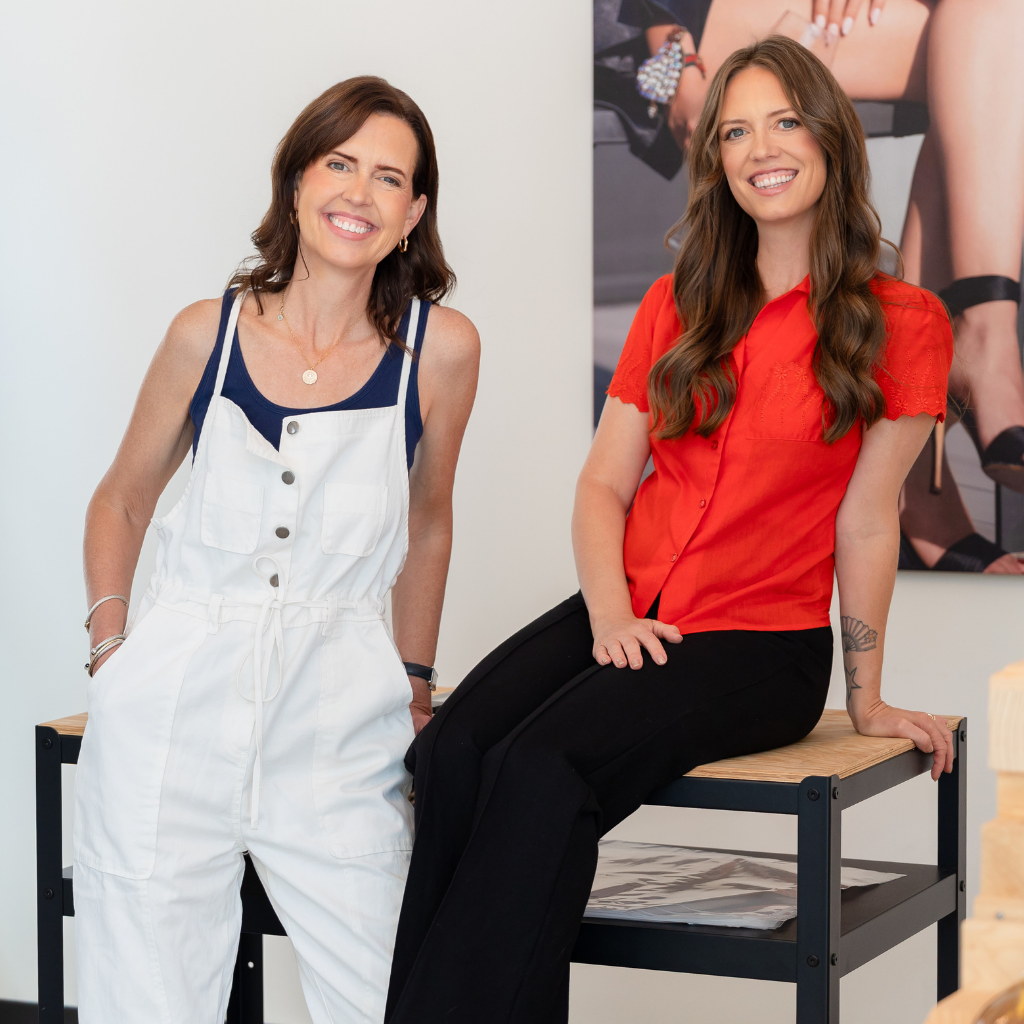
Getting ANA-curious consumers through the door is one challenge. Getting people who’ve never thought about ANA beverages through the door is a different problem entirely. Kristin Patrick, Co-Founder of Orangily, found a way to solve the second one.
It’s a problem worth solving. One of the biggest growth opportunities for the ANA category isn’t converting existing ANA consumers – it’s reaching the much larger group of people who are simply unaware of what ANA beverages have become. They haven’t tried the products. They don’t know what’s available. And they have no particular reason to seek it out. Getting those people into an ANA environment for the first time – on their terms, for a reason that has nothing to do with beverages – is one of the hardest and most valuable things a retail operator can do.
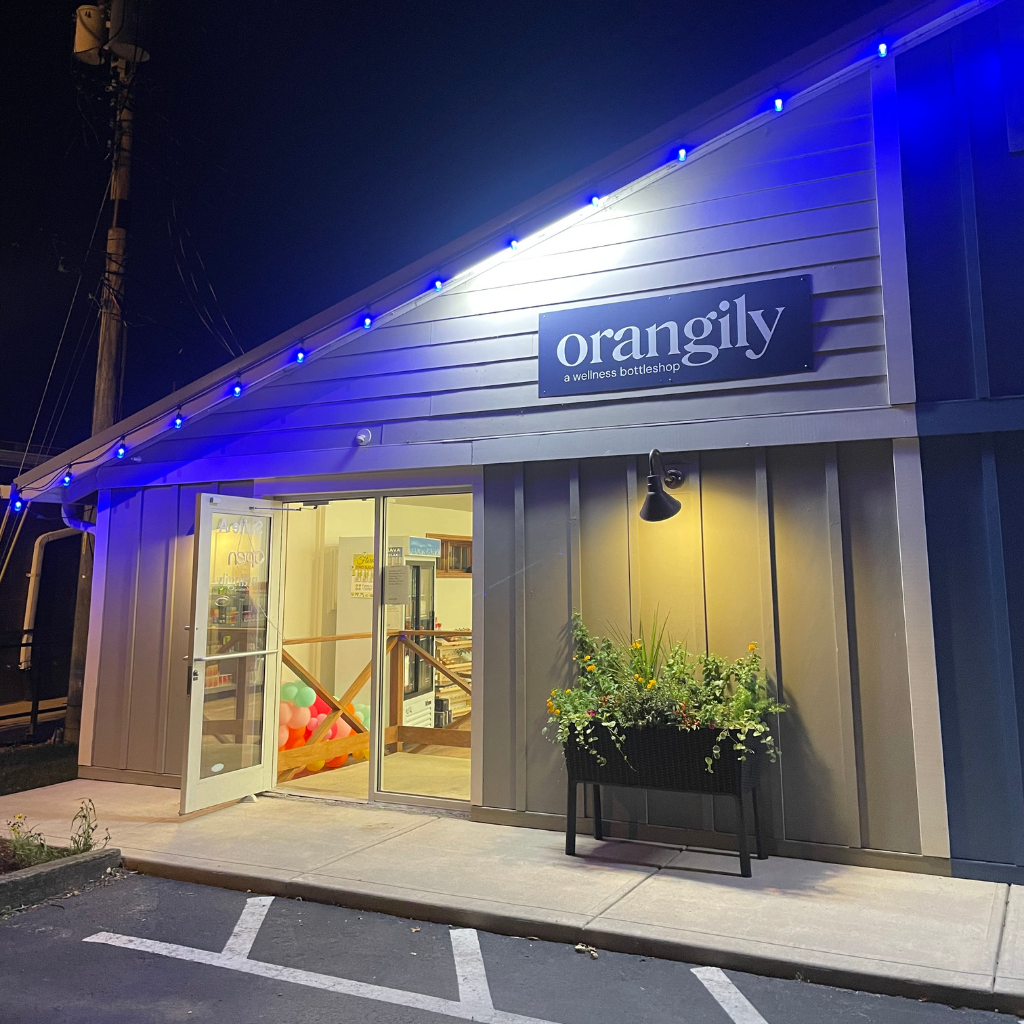
Orangily opened in the summer of 2022 in Carmel, Indiana, a thriving suburb on the north side of Indianapolis consistently ranked among the most desirable places to live in the United States. Kristin and her sister and business partner Andy launched with a straightforward vision: a curated bottle shop where they could handpick products, design the space their way, and build something of their own. What they didn’t plan for was the space they’d end up in.
Unable to find the compact footprint they’d imagined in a tight Hamilton County market, they signed a lease on a much larger location – a former liquor store with far more square footage than a small bottle shop needs. That oversized space turned out to be one of the best things that could have happened to the business.
The Perception Problem
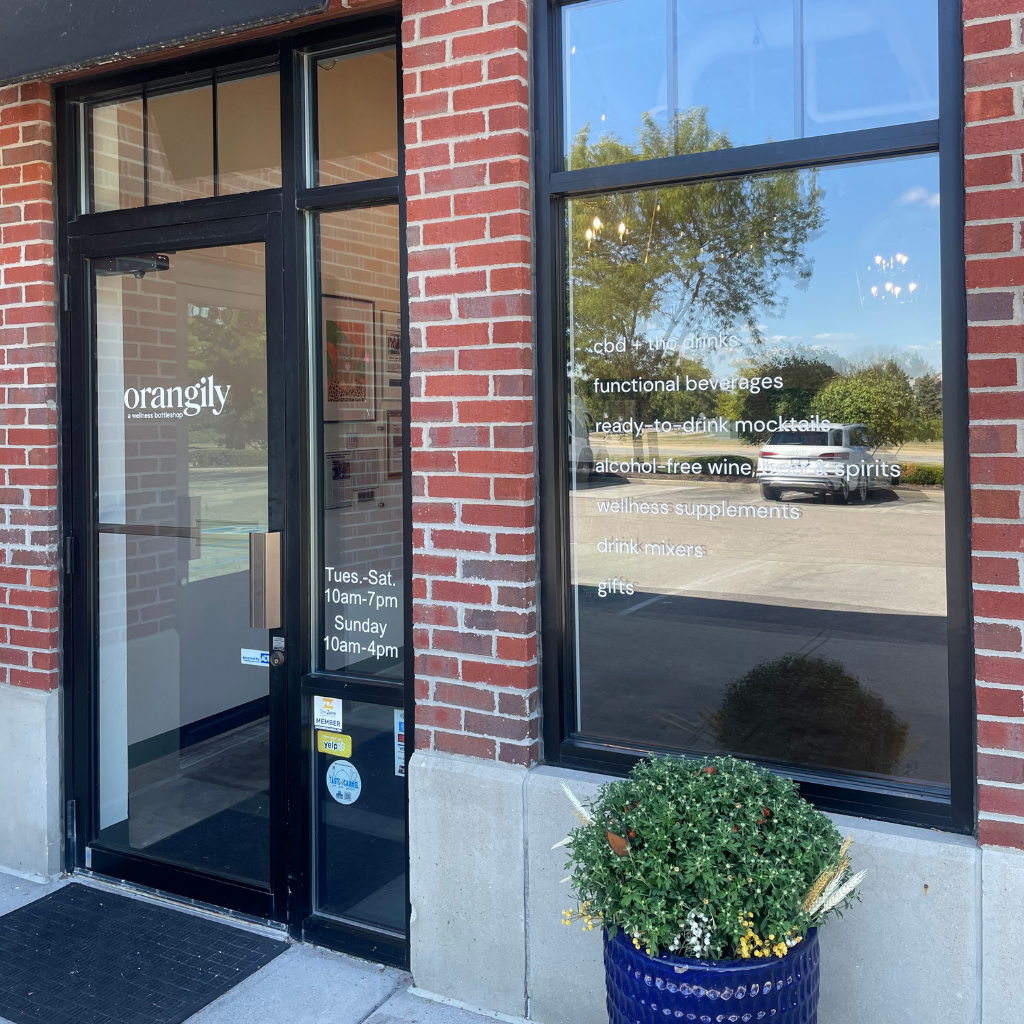
Even as Orangily found its footing – strong opening media coverage, a front-page feature in the Indianapolis Star, early sales momentum – Kristin was clear-eyed about a persistent challenge. “There’s this perception of being an alcohol-free store,” she explained. “There’s a lot of people who are like, why would I ever go there? I love alcohol. I love to drink.”
That perception is one of the most common barriers ANA retailers face. The category has made enormous strides in product quality and consumer awareness, but for a meaningful portion of the population, an ANA bottle shop still reads as a store that isn’t for them. No amount of social media content fully resolves that – because the people who need convincing aren’t following ANA brands to begin with.
Events, Kristin found, create a different kind of entry point entirely.
A Reason to Walk Through the Door
Not long after opening, requests started coming in. A yoga teacher wanted to lead a workshop. A health educator wanted to host a women’s health discussion. Groups wanted to come in and taste things together. Kristin had started the business with a firm intention not to do events – she’d spent years in public-facing community work and wanted no part of it with Orangily. But she started paying attention to who was asking, and more importantly, who those people would bring with them.
“People who would never come here independently,” she told me, “would come for a workshop, or a yoga class, or to hear a speaker. And then they’re in the shop, and they’re like, oh wow, this is cool, this is interesting.”
This is what makes community programming particularly valuable for category growth – and distinct from other forms of marketing. Someone who clicks on an ANA brand’s social media post is already open to the idea. Someone who walks into a wellness workshop at Orangily is not – and that’s exactly the point. They came for something else entirely. The ANA environment is a discovery, not a destination. That kind of first encounter, happening organically in a welcoming physical space, is how durable new relationships with the category tend to form.
A New Consumer Every Time
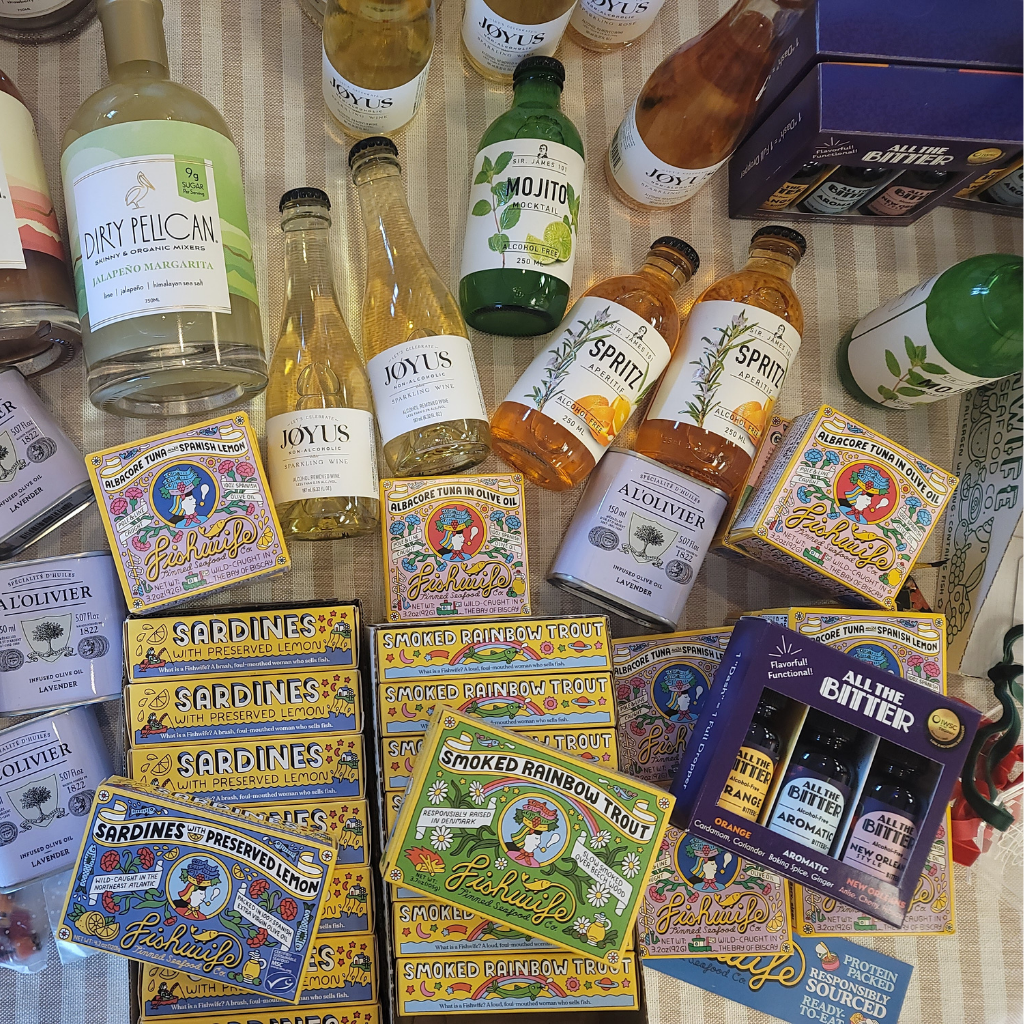
Every person who walks into Orangily for a yoga class and leaves having tried an ANA product for the first time is a consumer the category didn’t have before. Not because they were targeted with an ad. Not because they followed a brand on social media. But because they were given a reason to show up somewhere they never would have gone on their own – and the products did the rest.
Kristin and Andy built a structured event partnership model to make this repeatable – one where responsibility for attendance is shared between Orangily and the event partner, keeping the program sustainable. But the logistics are secondary to what’s actually happening: a steady flow of genuinely new people encountering the ANA category, many for the very first time, in an environment designed to make that discovery feel natural and welcoming.
“They’re intrigued,” Kristin said simply.
That intrigued response – repeated across dozens of events, with hundreds of first-time visitors – is exactly what category growth looks like at the retail level. Not a single viral moment. Not one big campaign. Just consistent, low-pressure introductions to products that speak for themselves once someone is actually in the room with them.
The Long Game for the Category
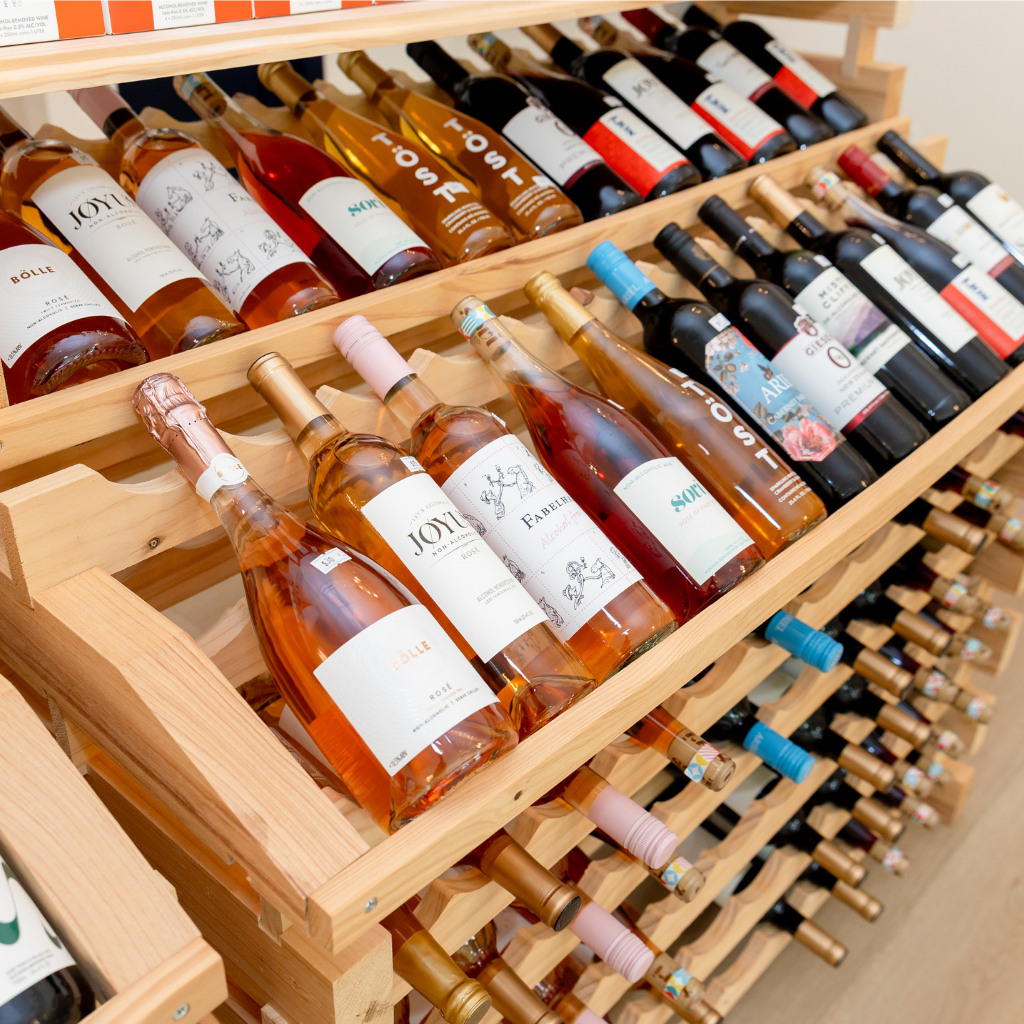
Category adoption rarely happens in a single moment. It accumulates. Someone sees a product at a neighbor’s party. A friend mentions it. They walk into a store for an unrelated reason and something catches their eye. Each of those touchpoints is low-stakes on its own, but together they move a person from unaware to curious to committed.
Community programming accelerates that process in a way that’s hard to replicate through digital channels alone. The attention economy is genuinely difficult – getting someone off their couch on a cold Thursday night requires a real reason. A workshop, a speaker, a wellness event gives them that reason. The ANA category benefits as a natural consequence.
Orangily’s event partners skew heavily toward health and wellness, which tracks with the community around them. Hamilton County draws a health-conscious, affluent demographic, and the people approaching Orangily to use the space reflect that. But the principle – using community programming to introduce the category to audiences who wouldn’t seek it out independently – applies well beyond any single market.
As Orangily continues to expand its distribution footprint across central Indiana and deepen its retail presence, the events program remains one of its most consistent tools for reaching new consumers. Not through advertising alone, and not by reaching only the already-converted – but by creating reasons for new people to walk through the door and discover, for the first time, what the ANA category actually looks like.