Why Total Wine is Dedicating 20 Feet of Space to Drive Adult Non-Alcoholic Category Growth
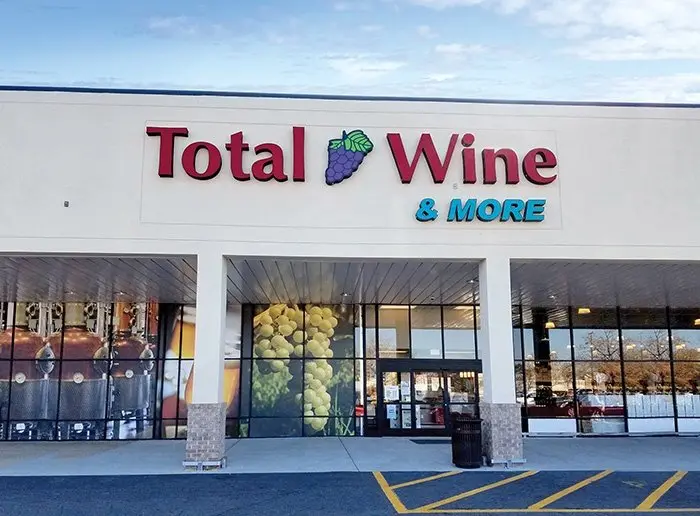
Most retailers dedicate a few feet of shelf space to non-alcoholic beverages. Total Wine took a different path.
They created destinations within their stores where consumers could explore the full spectrum of adult non-alcoholic beverages—and the results are showing up in their numbers. “Year-to-date across both wine, beer, and spirits, we’re up about 18% in terms of non-alcoholic sales,” Brian Gelb, who oversees all non-alcoholic categories at Total Wine, told me during our conversation. Their target of 20 feet of dedicated retail space in every location across 285 stores represents the kind of infrastructure investment that signals category legitimacy to both consumers and producers.
From Niche Category to Strategic Priority
Total Wine’s journey into adult non-alcoholic started modestly. “I think it probably just started as a little bit of a niche category at one point,” Brian explains. Like many retailers, they began with NA beers—”probably some O’Doul’s back in the day”—and slowly built from there as quality improved.
The turning point came when Total Wine recognized a fundamental shift happening in the market. “Consumers started having more interest in the category because the quality of the product improved, and so we obviously want to have a great selection of product for all of our customers,” Brian says. Rather than treating adult non-alcoholic as a small add-on, they made a strategic decision: lean into the category with serious retail infrastructure.
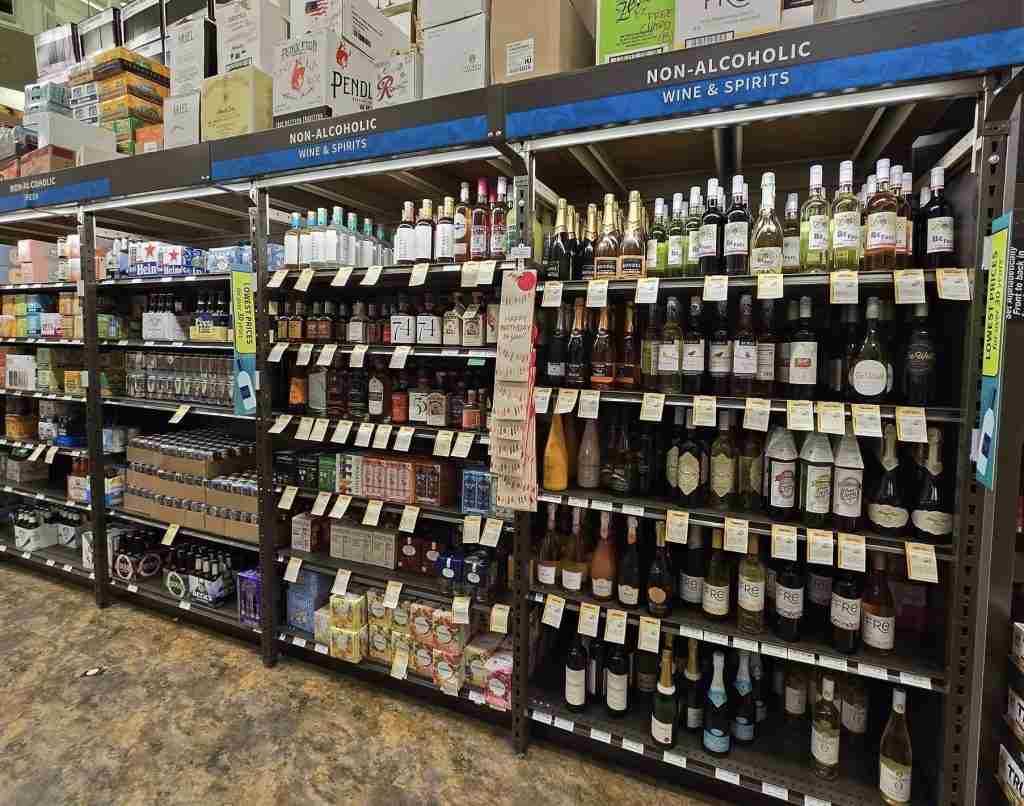
That decision translated into concrete space allocation. “Our target is we want to have about 20 feet of non-alcoholic space in our store,” Brian notes. “With all of our new stores and our resets, we’re trying to target about 20 feet of non-alcoholic merchandising space.” For a national retailer operating 285 stores across 30 states, this commitment represents millions of dollars in opportunity cost—space that could be allocated to established, high-margin alcoholic products.
Building Balanced Category Architecture
What makes Total Wine’s approach distinctive isn’t just the amount of space—it’s how they’re using it. While most retailers allocate 80%+ of their non-alcoholic footprint to beer, Total Wine has created a more balanced category mix that reflects the full spectrum of adult non-alcoholic innovation.
“Probably about 50%, give or take, of the non-alcoholic space is beer,” Brian explains. This still makes beer the largest segment, but it’s a deliberate choice that leaves substantial room for wine, spirits, and emerging functional beverages. Beer is “growing about 10%, so while it’s the biggest piece, it’s growing the smallest,” he notes, acknowledging that “it’s the most mature piece of the business.”
Non-alcoholic wine represents “probably about 30%, maybe 35% of our total non-alcoholic sales”—a significantly higher proportion than typical retail. This allocation reflects both consumer demand and Total Wine’s expertise in wine merchandising. “Where we’ve seen the most success within non-alcoholic wine is really sparkling wine and white wine,” Brian observes, noting that “those styles kind of lend themselves best to the non-alcoholic space.”
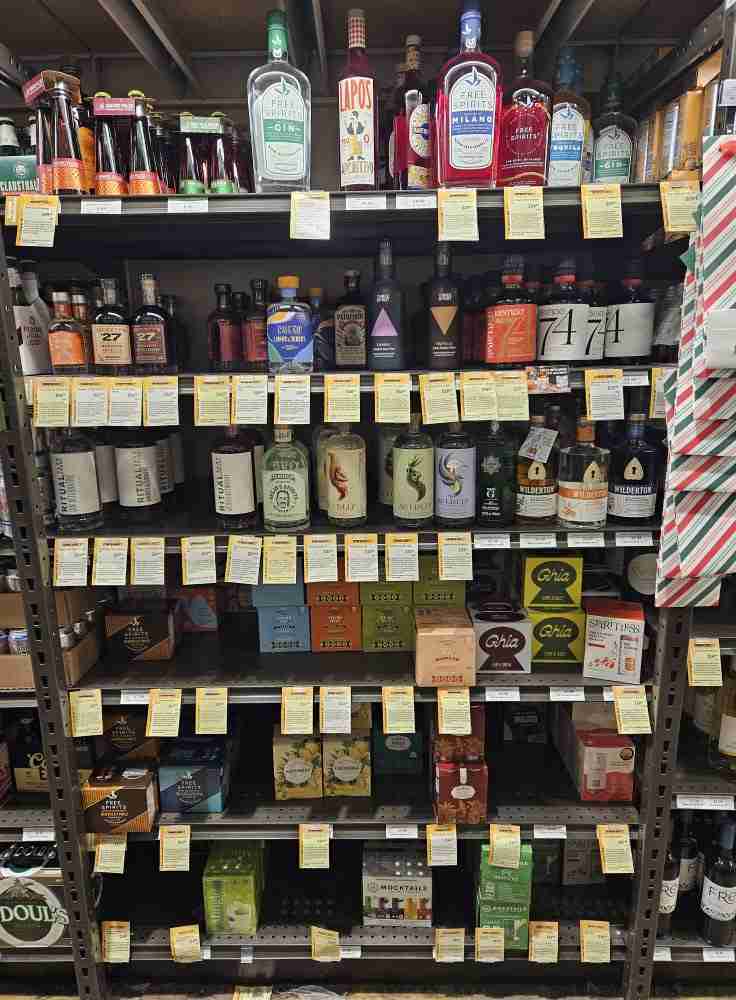
The remaining space accommodates non-alcoholic spirits and the emerging functional beverage category—products that don’t fit neatly into traditional wine, beer, or spirits classifications. This flexibility matters because it gives new product innovations room to reach consumers without fighting for inches on crowded shelves.
Direct Import Capabilities Enable Breadth
Total Wine’s infrastructure advantage extends beyond shelf space to sourcing capabilities. “We’ve always had, within our alcohol beverage portfolio, a way to what we call direct import, and that’s kind of like the winery direct or spirits direct model,” Brian explains. “We can do that with non-alcoholic product as well.”
This direct relationship with producers globally creates several benefits. “With non-alcoholic, it’s a lot easier because you don’t have a lot of the restrictions of the three-tier system, and we can get product directly from the suppliers to the consumers really rapidly, and have a broad assortment,” Brian notes.
The sourcing model allows Total Wine to offer consumers genuine variety. “We can have non-alcoholic wine from France, from California, from all over the world, and show a breadth of options,” he says. “It’s not just about having a red, white, and a sparkling, but within those categories, there are different profiles. And we want consumers to have a broad selection, and it’s the same within beer and spirits and these cocktails as well.”
This global sourcing capability, combined with dedicated retail space, creates accessible pathways for both established brands and emerging producers to reach consumers—infrastructure that benefits the entire category ecosystem.
Solving the Merchandising Challenge
Having 20 feet of space creates new opportunities, but it also presents a challenge that the industry is still working through: how do you organize products so consumers can actually find what they’re looking for?
“When they come in and they say, hey, I’m looking for non-alcoholic beverages, what does that mean?” Brian asks. “I’m pretty sure it doesn’t mean that they’re looking for a can of Coke. I think they’re looking for non-alcoholic wine, or an Athletic beer, or Mingle, or whatever it is, and so for us to figure out how to assort those products appropriately is something that we’re always trying to improve and get better at.”
The challenge becomes more complex with functional beverages—products with adaptogens, nootropics, or other ingredients designed to create specific experiences. “We’re trying to group these items within the functional benefits into buckets,” Brian explains. “Some are a little bit more sleep-oriented, some are a little bit more relaxed and calm, some are maybe uplift and energize.”
Total Wine is testing organizational approaches that guide consumers toward products matching their intended use case. “We’re trying to find ways to group the items to clear consumer need states,” Brian says, while being careful about claims since “all these products can affect consumers differently based on your own personal composition.”
This merchandising work matters because poor product placement can derail category growth. “You don’t want them to drink a sleep one when they’re about to go out with friends to a party. Meanwhile, you don’t want them drinking maybe the uplift energize one at 10 p.m. before they’re trying to go to bed,” Brian explains. “Being able to clearly articulate that to consumers is really important, because you want to make sure that they’re excited about the category, they come back a second, a third time. You don’t want to polarize them and give them a bad experience.”
Why Infrastructure Investment Matters
Total Wine’s 20-foot commitment does more than create sales opportunities for their own stores—it builds credibility for the entire adult non-alcoholic category. When a major national retailer dedicates significant floor space to a category, it signals to other retailers, distributors, and investors that the market opportunity is real and sustainable.
The space allocation also enables producer success in ways that smaller footprints can’t. Emerging brands get shelf presence alongside established players. New product formats can be tested with consumers. Category innovation has room to breathe rather than fighting for survival on a single shelf.
For consumers, the dedicated space creates a discovery environment. Rather than hunting for non-alcoholic options scattered throughout the store, they can explore a curated selection that demonstrates the category’s full potential. This concentrated presentation helps shift consumer perception from “non-alcoholic is a compromise” to “non-alcoholic offers genuine variety and quality.”
The Long-Term Category View
Total Wine’s infrastructure investment reflects a fundamental belief about where adult beverages are heading. “We really need to start shifting our language a little bit and focusing on adult beverages, which include non-alcoholic beverages as well,” Brian notes.
This isn’t about replacing alcohol—it’s about expanding what adult beverage means. The 20-foot footprint acknowledges that adult non-alcoholic isn’t a trend or a niche, but a permanent category that deserves retail infrastructure matching its growth trajectory and consumer interest.
“We love the category, and we’re trying to keep growing it. That’s our goal,” Brian says. With 285 stores implementing the 20-foot target and 18% year-to-date growth, Total Wine is building the retail infrastructure that makes that growth accessible to producers, discoverable for consumers, and viable for the industry.