How Gruvi’s Data-Driven Rebranding Solved Shelf Visibility and Product Discovery
Many adult non-alcoholic brands treat rebrands as aesthetic exercises – a prettier label here, a refreshed color palette there, maybe a new tagline that sounds more premium.
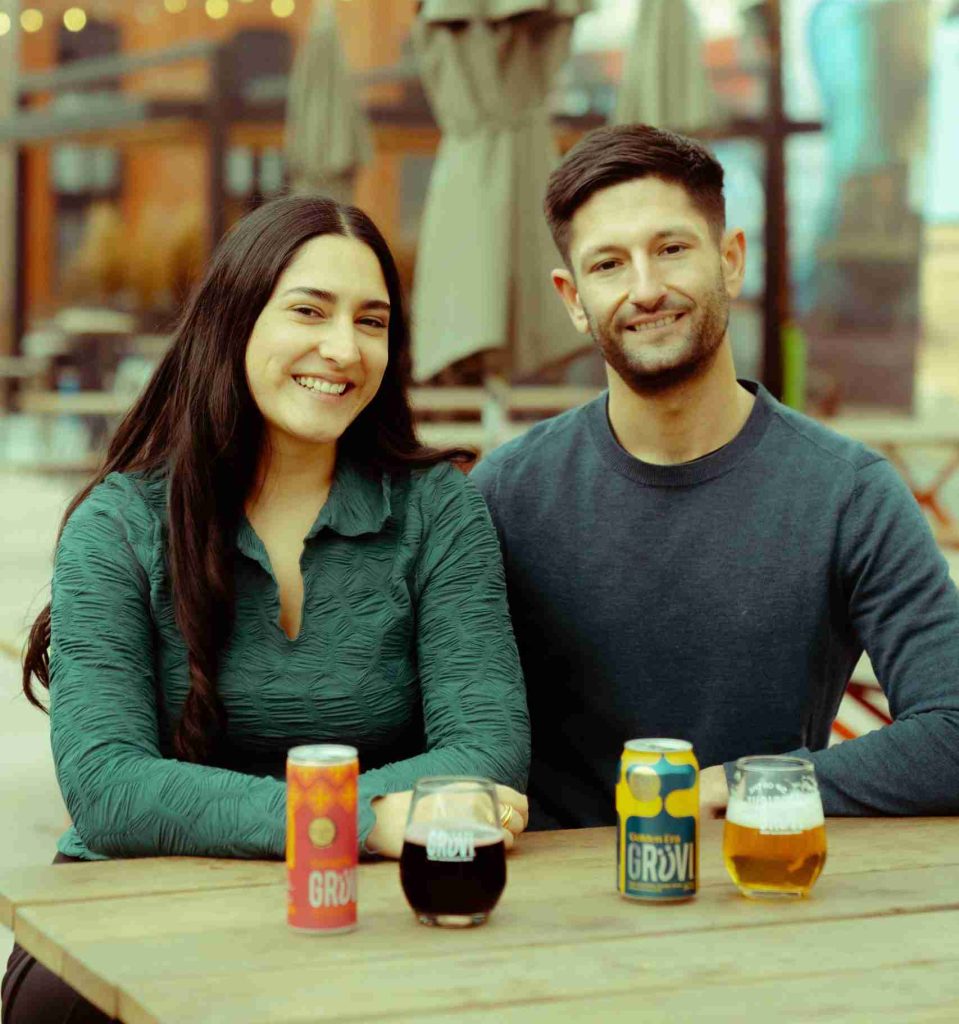
Anika Sawni, Co-Founder of Gruvi, took a fundamentally different approach. After six years in the category, she and her team didn’t start with mood boards or design trends. They started with data. Consumer feedback revealed that shoppers couldn’t easily find Gruvi on shelf because the logo wasn’t legible. Sales patterns showed customers who loved Gruvi’s beer often had no idea the brand offered wine and sangria. Shelf observations confirmed that the brand’s positioning around wellness was no longer resonating with the evolving ANA consumer base. “It wasn’t just about a prettier look or prettier packaging,” she explained, “but really about solving friction points that had come up for us that were impacting sales or consumer adoption.”
Building the Evidence Base
The rebrand didn’t happen overnight. Anika and her brother Niki, who co-founded Gruvi in 2019, spent years gathering insights about what was and wasn’t working. One of their most valuable tools turned out to be remarkably simple: QR codes on every single product.
“We put our QR codes on every single product of ours, and it’s not a QR code that’s like, oh, here, go to our website,” Anika told me. “It’s, hey, what do you like? What don’t you like? What would you change?” Every day, feedback flows into the team’s Slack channel – ratings, preferences, specific suggestions. “Every day, we get Slack messages coming in and they rated this a 9 out of 10, and here’s what they liked and didn’t like.”
This constant stream of consumer input revealed patterns the team couldn’t ignore. “We had this discrepancy of people hearing about the brand, maybe reading an article about Gruvi, but not necessarily having the brand recognition, and not easily being able to find it on shelf, because our logo was kind of a very dainty and thin logo as well,” Anika explained. The brand awareness was there – the shelf visibility wasn’t.
Solving the Legibility Problem

The first friction point was the most fundamental: customers literally couldn’t see Gruvi clearly enough to find it.
The original logo, while aesthetically pleasing, simply wasn’t built for the reality of retail environments. “We’re losing customers through this just legibility of who we are and getting that across clearly,” Anika said. The new logo maintains a line of continuation with the original but dramatically improves functionality. “Now it’s a lot more bolder, it’s clear and it’s legible, it’s confident, but still has that touch of playfulness, which is, again, the essence of the brand.”
Beyond the logo itself, the team realized they needed to reconsider the hierarchy of information on their packaging. As the ANA category has grown, consumers have become more intentional about seeking out these products. “We realized that non-alcoholic actually needs to be really clear and prominent for the consumer, especially as the category’s been growing,” Anika explained. “People want to know and be able to spot that on shelf, that it is clearly non-alcoholic.”
Refining Positioning Through Six Years of Learning

While improving legibility solved immediate shelf presence issues, Gruvi’s rebrand also addressed a deeper strategic challenge: positioning.
When Gruvi launched in 2019, the adult non-alcoholic category was still finding its footing. Early adopters tended to come from the wellness community, making health-conscious choices about alcohol consumption. Gruvi’s original branding reflected that reality, with design elements that leaned into wellness aesthetics.
But after six years in the market, Anika and her team noticed the consumer base evolving. “We were able to hone in our positioning and our differentiators within the market, and there was a better opportunity to communicate that to the consumer and really get them to feel this essence of Gruvi through our packaging,” she said. The rebrand shifted away from wellness-focused messaging toward something broader: fun, energy, and choice in social occasions, whether drinking or not.
This evolution wasn’t about abandoning core values – it was about better articulating what made Gruvi unique. The brand name itself – a play on “groovy” – had always been about showing you could still have a good time without alcohol. The rebrand simply brought the packaging in line with that founding vision.
Communicating Taste and Credibility

Another critical friction point emerged around taste perception and product differentiation. Gruvi offers something unusual in the ANA space: beers, wines, and sangria all under one brand. But many customers discovering one category of products didn’t realize the full range existed.
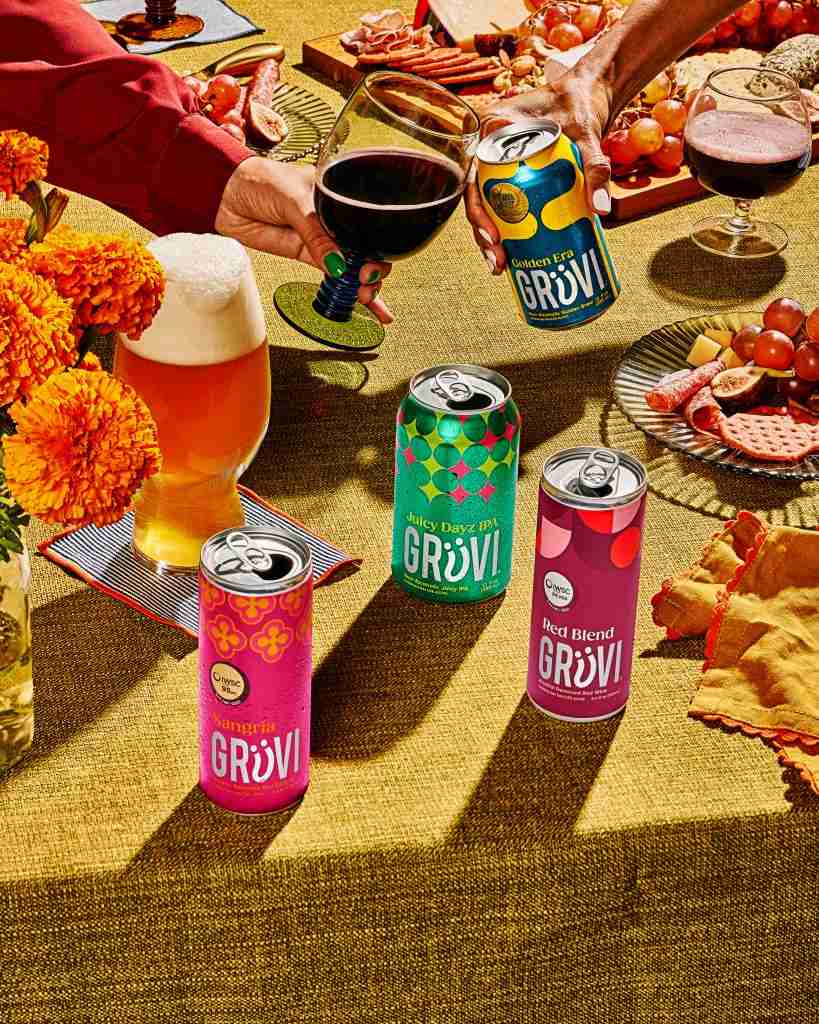
The rebrand created visual cohesion across categories while still allowing each product to stand out. “This has helped us create kind of cohesion and opportunities for us to brand block a little bit more across categories,” Anika explained. On shelf, customers can now recognize the Gruvi brand family while still clearly distinguishing between beer, wine, and sangria options.
The team also found an opportunity to leverage third-party validation more effectively. Over the years, Gruvi had accumulated impressive credentials – gold medals at the World Beer Cup and International Wine and Spirits competitions, making them one of the first brands to win top honors for both beer and wine. “It’s one thing as a founder to be like, oh my god, my NA wine tastes so good, but when you really have this third-party credibility, I think that that goes a long way,” Anika said. “We actually realized that we weren’t even really putting that out there that much.”
The new packaging prominently features these awards on cans and boxes. The team also developed visual flavor cues – patterns derived from the actual ingredients and taste profiles of each product. “It was intentional in every step to think of, what are the flavor cues of this profile? And then our patterns were actually deviated from those flavors,” Anika explained. On cartons, they added images of “big spraying cans that are just mouth-watering to lean into, again, a consumer picking it up on shelf.”
Enabling Continuous Improvement

The rebrand didn’t just solve existing problems – it created infrastructure for ongoing iteration. The QR code feedback system that helped identify rebrand opportunities continues to drive product development post-rebrand.
“We’ve really created our innovation pipeline with our community,” Anika said. The approach allows Gruvi to respond quickly to consumer preferences. “Anything that doesn’t have a gold medal already to its name, we’re always making adjustments to it.” Even award-winning products aren’t considered finished – the team continues gathering feedback and making refinements.
This community-driven approach has practical advantages for a small team. “I think it’s something that’s really cool and unique, and I encourage other smaller brands to think this way, of involving your community,” Anika noted. Rather than relying solely on internal R&D resources, Gruvi taps into real-world consumer experience to guide product evolution.
Unlocking New Distribution Channels
With improved shelf presence and clearer brand communication, Gruvi found opportunities to expand into channels that had been difficult to penetrate before the rebrand.
The team made a strategic decision to focus deeply on their home market of Colorado rather than spreading resources thin across multiple regions. Within Colorado, they shifted strategy to prioritize on-premise venues – bars, restaurants, and especially large venues like stadiums and amphitheaters.
“Venues for us, they’ve really aligned with who we are as a brand, meeting people where they are in those social occasions,” Anika explained. The variety Gruvi offers – beer, wine, and sangria – creates advantages in these environments. “Because of the variety we have, it’s an advantage for these venues as well, because we can be their beer, their wine, and their sangria all in one.”
The venue strategy serves dual purposes: generating volume while building brand awareness. “Of course, we’re doing great volume through some of these accounts, now we’re in Mile High Stadium, and Ball Arena, and Fiddler’s Amphitheater, and all of these great music venues,” Anika said. These placements create “opportunity for brand awareness for us and trial at kind of a low-cost level for the everyday consumer.”
The impact has been substantial. “Maybe 3 years ago even, it was about 5% of our sales were on-premise, and now we’re almost doing like a third of our entire volume through on-premise and venues and things like that,” Anika shared.
What This Means for ANA Category Growth
Gruvi’s approach demonstrates how strategic rebranding – driven by actual consumer friction points rather than aesthetic preferences – can unlock growth in the adult non-alcoholic category.
For retailers and distributors, this case shows the value of brands that systematically gather and act on consumer feedback. Gruvi didn’t guess at what consumers needed – they built systems to collect direct input and used that data to make packaging decisions that improve shelf performance.
For venues and on-premise accounts, the Gruvi example illustrates how multi-category ANA brands can simplify purchasing decisions while meeting diverse consumer preferences. A single brand partner that can cover beer, wine, and sangria reduces complexity for buyers while ensuring options for different occasions and tastes.
For the broader category, Gruvi’s evolution from wellness-focused positioning to fun-and-energy messaging reflects the ANA consumer base expanding beyond early adopters. As Anika noted, the category is “evolving so fast” – and brands that can adapt their communication while maintaining product quality position themselves to capture that growth.
The rebrand also highlights the importance of clear category signaling. As more consumers actively seek out adult non-alcoholic options, prominent “non-alcoholic” labeling becomes a feature, not just a disclaimer. Brands that make this easy for consumers to identify benefit from the category’s growing intentionality.
Perhaps most significantly, Gruvi’s community-driven innovation approach suggests a model for how smaller brands can compete with larger players. By involving customers directly in product development through accessible feedback mechanisms, they create both better products and stronger brand loyalty – turning consumers into active participants in the brand’s evolution.
“I think it’s just the name of the game because the category’s evolving so fast as well,” Anika said. In a rapidly growing category, the brands that will thrive are those that can listen to consumers, identify friction points, and adapt quickly – exactly what Gruvi has built a system to do.