ABV Technology is Building De-Alcoholization Infrastructure to Enable Craft Producers to Enter the ANA Market
For years, craft breweries faced an impossible barrier when it came to making non-alcoholic beer.
De-alcoholization equipment cost millions and required industrial-scale facilities. The few companies offering de-alcoholization services were often hundreds of miles away. And even if a small brewer could access the technology, most systems stripped out the flavors and aromas that made their flagship beers special.
Ben Jordan, Founder of ABV Technology, saw an opportunity to change that.
Starting in 2017, Jordan set out to solve both problems at once – building de-alcoholization technology that preserved what made craft beverages special, and deploying it in a way that craft producers could actually access. “Our goal as a company was to bring this kind of alcohol adjustment technology to the craft beverage makers of the world,” Jordan told me during our conversation. “If you look at who’s winning right now in adult non-alcoholic beverages, you’ll see that it’s a lot of regional and national players who have access to de-alcoholization technology.”
What ABV Technology built wasn’t just better equipment. It was an entirely new infrastructure model that transformed Minneapolis into the ANA beer capital of America and created a pathway for craft producers of all sizes to enter the adult non-alcoholic space.
Technology That Preserves What Craft Producers Actually Make
Jordan’s team faced a critical design decision early on. “When we were building our tech, we wanted to make sure that we could be very flexible in terms of which beverages we could work with,” he explained. “The second criteria we had was we wanted to make sure we did the least amount of harm with the beverage as it passed through our de-alcoholization process.”
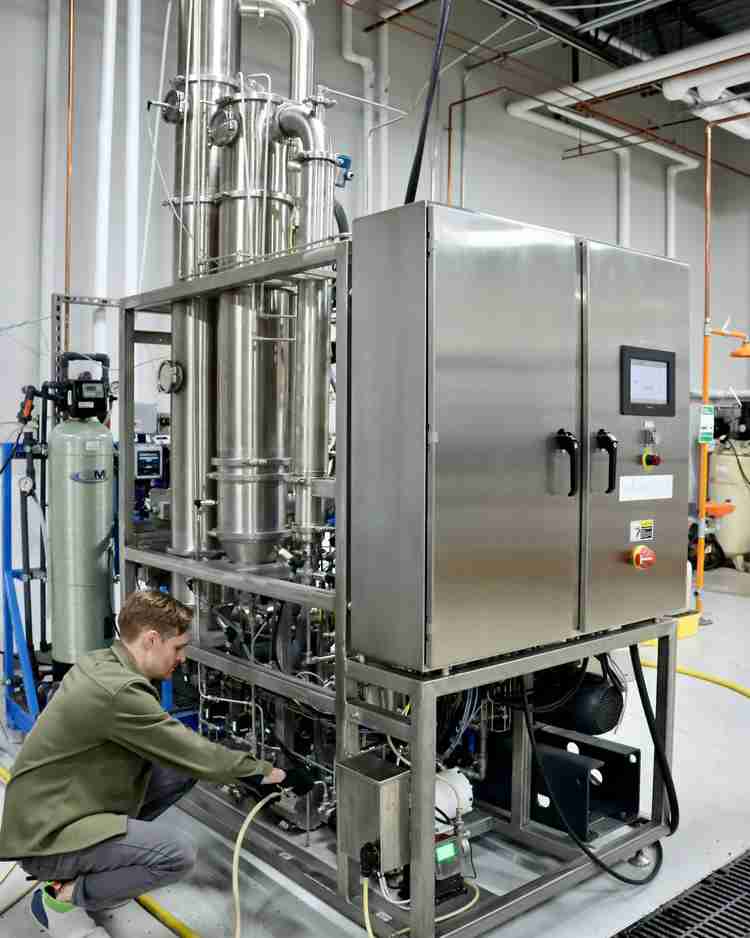
Those two requirements led them to develop what they call the Equalizer – a two-stage evaporative system that works fundamentally differently from traditional de-alcoholization methods.
The process separates aromas first, then removes the alcohol, and finally recombines the aromas with the original beverage. “You’re really not stripping out all of the things that you want, the essences, if you will,” Jordan said. “You’re separating them and then putting them back together.”
The critical innovation is that this two-stage process happens at room temperature. That prevents the “cooking” effect that damages flavor compounds in heat-based systems. The result is what Jordan describes as beverages that are “really true to their recipe.”
“A lot of my customers come to me and say, I have my flagship IPA, or my flagship Sauvignon Blanc, and I want to make it into a really great non-alcoholic version of that beverage,” Jordan shared. The Equalizer enables them to do exactly that – keeping the flavors and essences that define their brand without the imbalance that comes from more aggressive extraction methods.
But having great technology doesn’t matter if craft producers can’t access it. That’s where ABV Technology’s deployment model becomes critical.
Making Industrial Technology Fit in a Craft Brewery
Jordan designed the Equalizer to fit where craft breweries actually have space – in the footprint of a standard tank. The machine occupies just 4 feet by 8 feet of floor space and stands 12 to 13 feet tall, depending on the version.
“We wanted to make it that size so that you could put it into a craft brewery and take a 20-barrel tank of IPA and turn it into 20 barrels of NA overnight,” Jordan explained.
That compact design meant craft breweries could potentially own the equipment themselves. But Jordan recognized that even at a reduced size, buying a de-alcoholization system represented a major capital investment for a small producer testing the ANA beer market for the first time.
So ABV Technology built something else first – a service facility in Minneapolis where breweries could start small.
The Hub-and-Spoke Model That Created an ANA Beer Capital
Rather than just selling equipment, ABV Technology opened its doors as a service provider. “Our business model is to have people come in the door and say, with as little as one keg, I want to try making this non-alcoholic beverage with you,” Jordan said.
That single keg could turn into a pallet. A pallet could become a tote. A tote could scale to a tank truck. “Once they’ve built up to that level, and they’ve found out that they’ve got a market, they’ve got a brand that works, they are able to then scale up even further with us by buying a machine,” he explained.
The model creates a continuous pathway for growth. “We don’t have to let that customer go once they leave my service center. We can keep growing with them.”
The impact on the local market has been dramatic. With 120 breweries in the Minneapolis-St. Paul metro area regularly bringing product to ABV Technology for de-alcoholization, the region has become what Jordan describes as having “more brands of non-alcoholic beer available per capita than anywhere else.”
It’s similar to what happened with wine in California, Jordan noted, where the availability of alcohol adjustment services created regional density. “There are a lot of places in California that you can go to get the amount of alcohol in your wine adjusted. And that wasn’t a thing 10 years ago.”
But ABV Technology doesn’t just de-alcoholize beverages and send them back. They provide what Jordan calls “full-service” support – helping craft producers finish the product, can it, keg it, and handle all the steps around making an ANA beverage ready for market.
Infrastructure That Scales From 500 Barrels to Multinationals
The flexibility of ABV Technology’s model shows up in their customer base. “I’ve got customers as small as 500 barrels a year, and I’ve got customers as large as, well, very large multinationals, who work with us because of that ability to scale with us,” Jordan said.
That range makes ABV Technology unique in the de-alcoholization space. “For anybody who’s tried to find de-alcoholization technology, it either isn’t very flexible and doesn’t really make a true representation of your fully alcoholic brand, or it’s so pricey that you can’t possibly afford to put it into your facility, and there’s not one available for miles around.”
The combination of preservation-focused technology and accessible service creates entry points that didn’t exist before. A small brewery can test the ANA market with minimal investment. If it works, they can scale up through ABV Technology’s service. If it really works, they can eventually purchase their own Equalizer and bring the process in-house – while still maintaining the relationship with ABV Technology as they continue to grow.
The model is now expanding beyond beer. ABV Technology has moved into wine and is adding spirits capability. Jordan shared that they’re waiting on licensing to launch a distillery operation, with several customers already lined up for trials.
What This Infrastructure Means for ANA Category Growth
ABV Technology’s approach demonstrates how infrastructure investment can directly accelerate category expansion. By solving both the technology problem and the access problem simultaneously, they’ve enabled craft producers to participate in the ANA space in ways that weren’t previously possible.
The Minneapolis example shows what happens when de-alcoholization becomes locally accessible – you get market density that benefits all producers. More ANA beer brands means more shelf space dedicated to the category. More consumer awareness. More retailer confidence in the category’s viability.
For craft producers in other regions, the hub-and-spoke model offers a blueprint. The pathway from single-keg trial to machine ownership reduces risk at every stage while building producer capability and market knowledge.
The technology itself – with its focus on preservation rather than just extraction – addresses a quality barrier that has held back craft ANA beverages. When a brewery can make an ANA version that truly represents their flagship brand, they bring their existing reputation and customer base into the category.
“We’re really about providing people with choices,” Jordan reflected. “We’re trying to give people more opportunity to drink what they’re looking for at that moment.”
By building infrastructure that makes those choices accessible to craft producers, ABV Technology is helping to ensure the ANA beverage category reflects the same diversity and quality that defines the broader craft beverage world.