How TÖST Built National Distribution by Designing Beverages for Occasions Instead of Replicating Alcohol
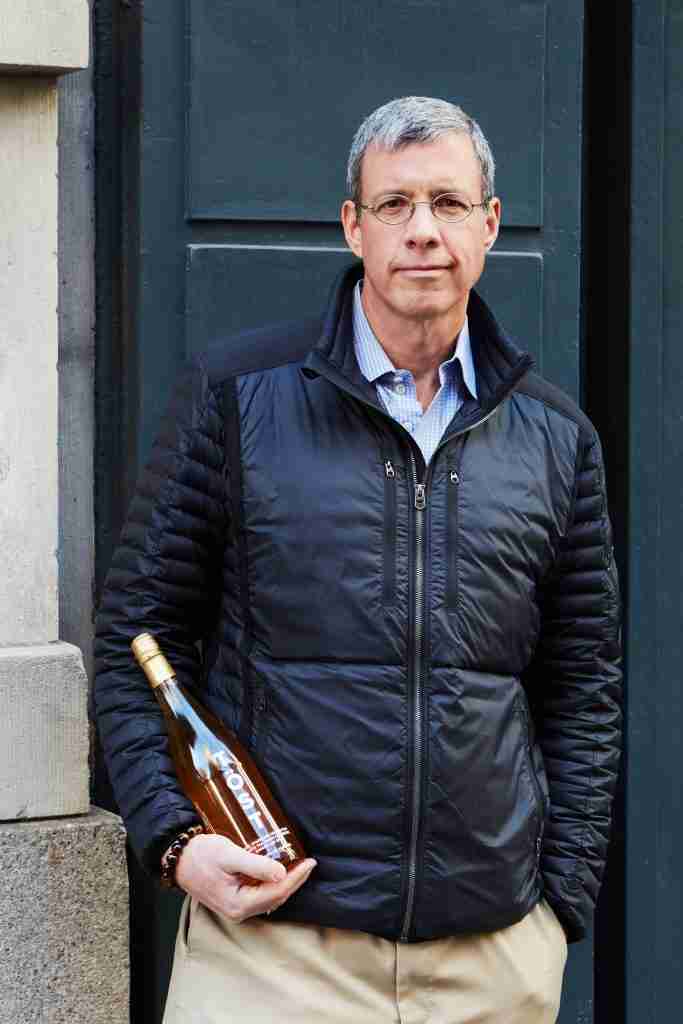
When Brooks Addington, CEO and Founder of TÖST Beverages, and his team created TÖST seven years ago, they started with a fundamental question: what does a beverage actually need to be to meet the moment? Their answer wasn’t about replicating champagne, wine, or other drinks with alcohol. It was about understanding the rituals – celebrating, pairing a drink with food, separating workday from evening – and creating a beverage that could serve those occasions on its own merit.
That occasion-first philosophy shaped everything about how TÖST developed its products. And it created an unexpected advantage: because TÖST wasn’t designed to fit into existing categories, it could adapt to different retail environments while the adult non-alcoholic beverage category continued to evolve. The result is a brand now present in over 10,000 retail locations across North America, succeeding across wine sets, premium sparkling sections, and dedicated ANA displays.
Identifying What the Occasion Actually Requires
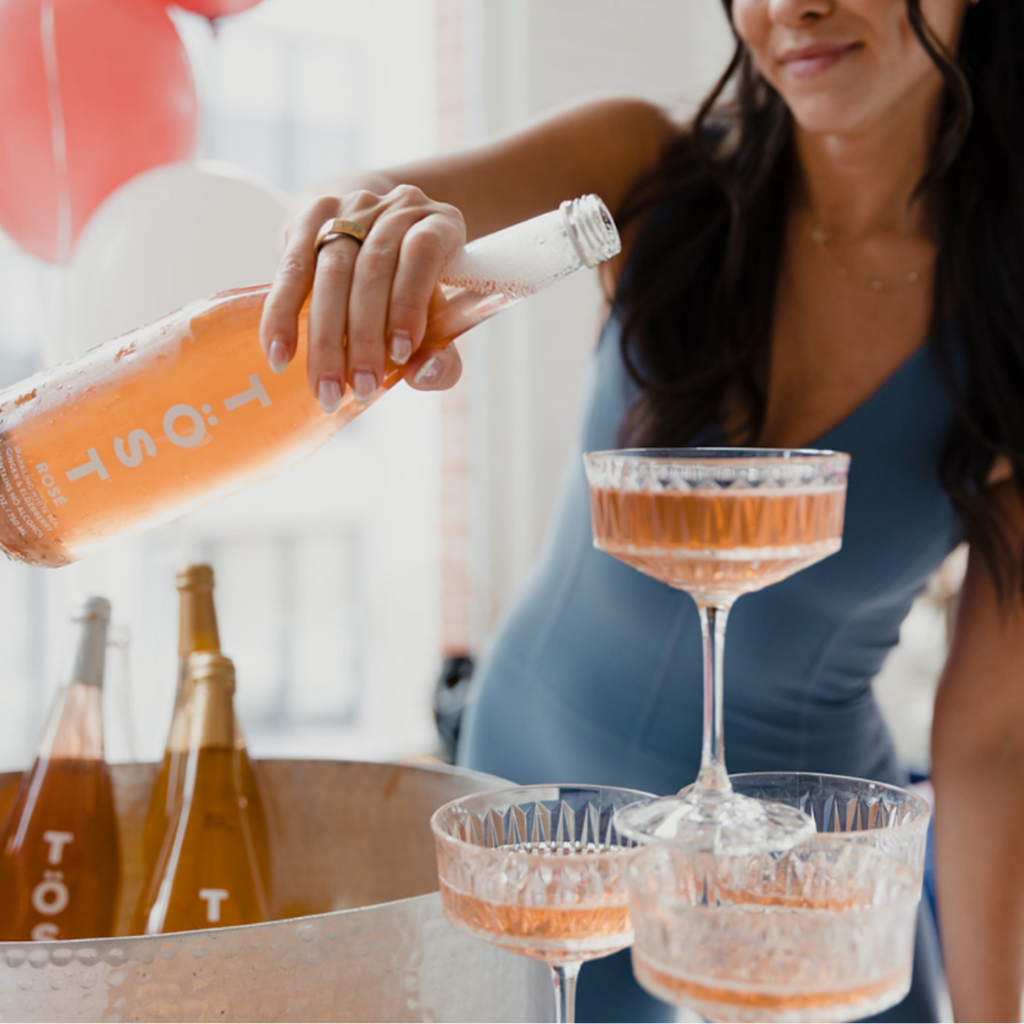
TÖST’s product development started with a different premise than most brands in the space. Instead of asking “how do we make this taste like champagne without alcohol,” Addington and his team asked what people actually need from the moments where they might typically reach for an alcoholic beverage.
“There are these rituals that we have that have often been with alcohol. They don’t have to necessarily continue to be with alcohol or alcoholic derivatives or mimics of alcohol,” Addington explained to me. “They just have to be something that’s going to allow you to enjoy that moment.”
The team identified specific attributes that create what Addington calls “that moment of elevation” – the feeling that makes a beverage special enough for a celebration, sophisticated enough to pair with a meal, or distinct enough to mark the transition from work to personal time.
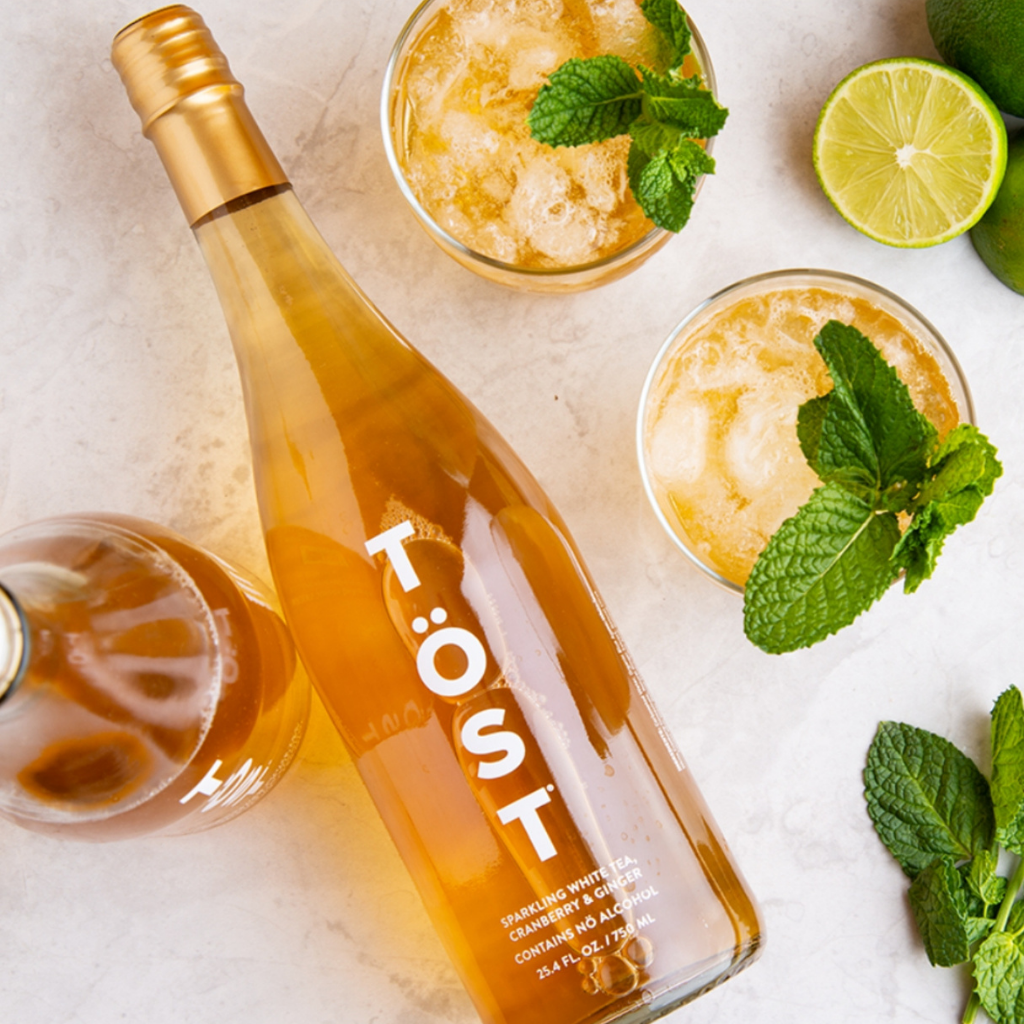
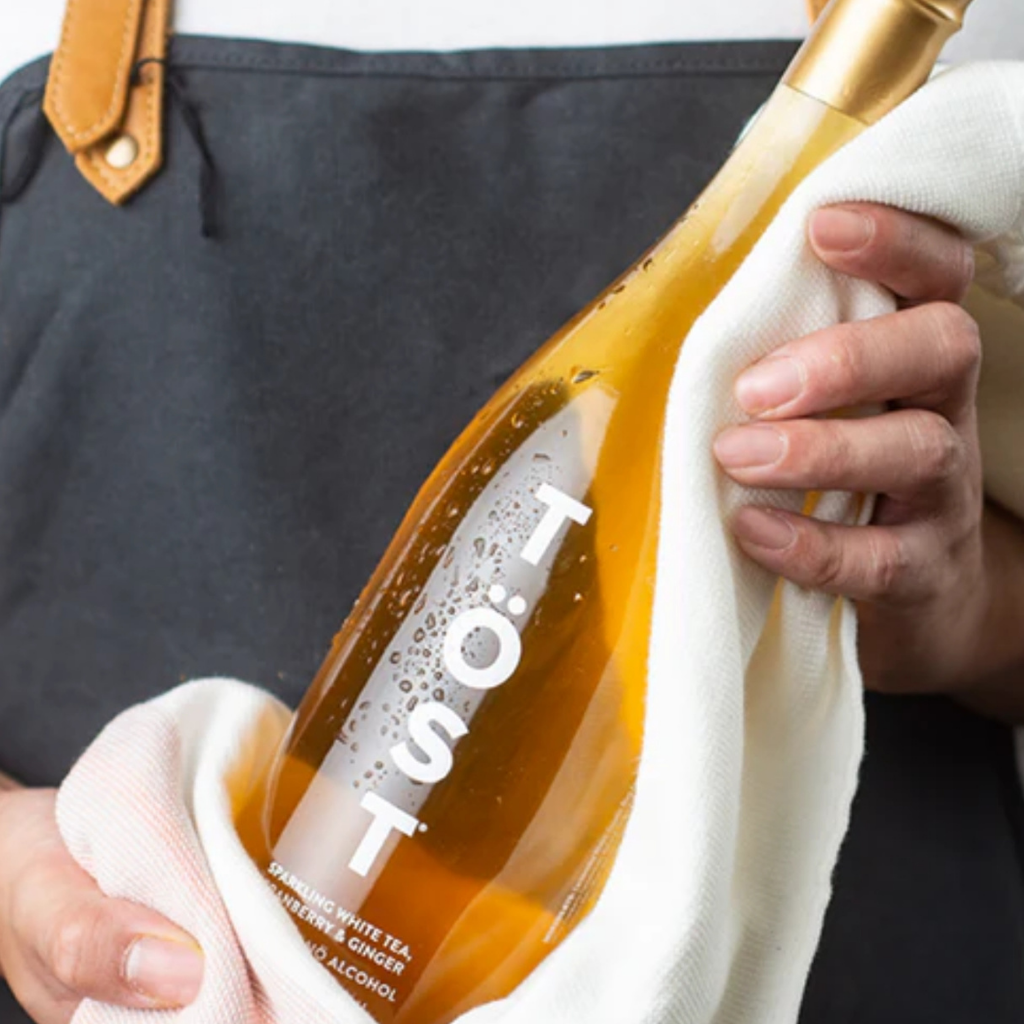
Those attributes became the design brief. Tea provided tannins. White cranberry contributed astringency. Floral extracts created nose. Each ingredient served a functional purpose in building an experience, not in mimicking a specific alcoholic drink.
“We think about tea, it’s for the tannins. We think about white cranberry, it’s the astringency. We have floral extracts for a nose, we want to have a finish,” Addington said. “All these pieces were put together in order to create something.”
The product was created by chefs with food pairing in mind. The goal was a lower-calorie beverage made from concentrates and botanicals that could stand on its own rather than being measured against what it wasn’t trying to be.
“We wanted to focus on the experience more than having a taste profile that tasted just like a sparkling wine, or a champagne, or a Pinot Grigio, or something,” Addington told me. “We wanted to create something that was moving forward and positive in that direction, not something that was mimicking another beverage.”
When Category Ambiguity Becomes Strategic Advantage
TÖST’s occasion-based approach created an immediate challenge: retailers didn’t know where to put it.
“When we launched, it was, are you a sparkling juice? This is a better Martinelli’s. No, we’re not doing that, so you’re a sparkling tea? No, we’re not doing that. But you’re not a de-alc wine? No, we’re not,” Addington recalled. “Really kind of defining and pushing people towards that occasion has been the primary challenge.”
For retailers accustomed to clear category definitions, TÖST presented a puzzle. It wasn’t sparkling juice, wasn’t sparkling tea, and wasn’t de-alcoholized wine. Addington told me this “where does it belong” question followed him everywhere during the early years.
“From a retailer standpoint, when you don’t fit into a perfect square box, it becomes a challenge, right?” he said.
But that ambiguity, rooted in TÖST’s decision to design for occasions rather than replicate categories, eventually became an advantage. Because the product wasn’t locked into mimicking a specific alcoholic beverage, it could adapt to different retailers’ existing merchandising structures.
“We’re ending up in a lot of wine sets in some retailers, and we’re ending up in non-alcoholic sets in others,” Addington explained. “We believe that those will meld over time, and there’ll be non-alcoholic sets everywhere. But if you look back, we’ve got retailers who are in premium sparkling.”
TÖST could meet retailers where they were – fitting into wine sections for buyers who viewed it as a wine-occasion product, or into premium sparkling for those who saw it as an elevated beverage category, or into dedicated ANA sets for retailers ready to merchandise the category separately.
This flexibility proved crucial as the category itself was still being defined across different retail environments.
Building Distribution State by State
TÖST’s distribution growth happened methodically over seven years, building market by market rather than trying to scale nationally all at once.
“We started out when we first launched, we were very much in the mindset of local, regional, national, global,” Addington said. “Let’s win local, then go regional, then go national, then go global.”
The brand moved to regional coverage relatively quickly and picked up some national accounts early on. But the real infrastructure building – creating the distributor network needed to properly service national retailers – became the primary focus in the last few years.
The approach was straightforward: win one state, prove the concept worked, then use that success to open the next market. Each successful market provided data that made conversations with new distributors easier.
“We’ve built that, we’ve gone about it with just literally step-by-step, winning each state, developing those relationships,” Addington told me.
When retailers in new markets expressed interest but lacked local distribution for TÖST, the brand could point to performance data from existing markets. The conversations typically went like this, Addington explained: “We’d love to give you these 60 doors, 100 doors, but we need distribution.” Then to distributors: “Having some first mover advantage and showing some success, and having the IRI data behind it, has allowed other distributors in other states to say, yep, we’re looking for something – price point works, product works.”
The product’s flexible positioning helped accelerate this process. Because TÖST could succeed in wine sets, premium sparkling sections, or dedicated ANA displays, retailers didn’t need to wait for their stores to develop ANA-specific merchandising strategies. They could start carrying TÖST in whatever category structure made sense for their current setup.
Shifting From Door Count to Market Depth
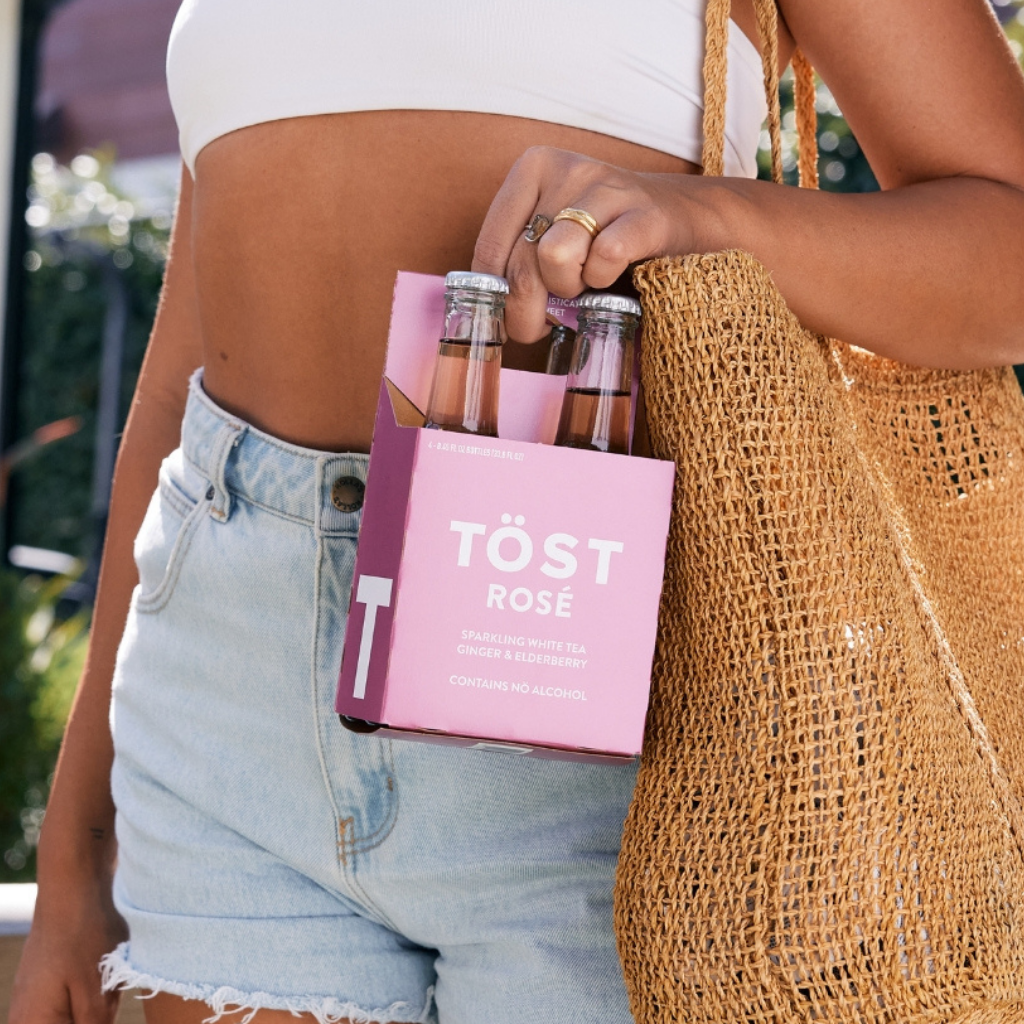
TÖST now sits in over 10,000 retail locations across North America and operates in about a dozen countries. But Addington’s strategic focus has shifted from acquisition to execution.
“We grew really rapidly. We’re killing it in some places, and we’re getting killed in others,” he told me. “How do we really get to a place where we’re doing well across the board? For us, it’s not necessarily getting more doors, but it’s really getting deeper in those doors that we’re in.”
The current strategy emphasizes on-premise presence – restaurants, bars, and events – to build awareness that drives retail performance. TÖST has focused heavily on this channel for the last year and a half with some success.
“On-premise is a big focus of ours,” Addington said. “We’d like to be more on-premise, we’d like to be more in events, and have those that will then help drive all those retail doors that we have.”
TÖST’s experience in Iceland provides a model for what depth can accomplish. “Per capita, our business in Iceland’s quite large. We’ve really saturated that market,” Addington noted. “If Iceland were America, we’d be a very large company, indeed.”
The long-term goal is brand synonymity with the occasion itself – having TÖST become the default reference point for these moments.
“Four years from now, we’d like you to walk into a restaurant and say, you know, do you have TÖST? And have the restaurant go, we don’t have TÖST, but we have this,” Addington explained. “When TÖST becomes synonymous with that occasion and that moment, that’s really the goal for us.”
How TÖST’s Approach Expands ANA Category Opportunities
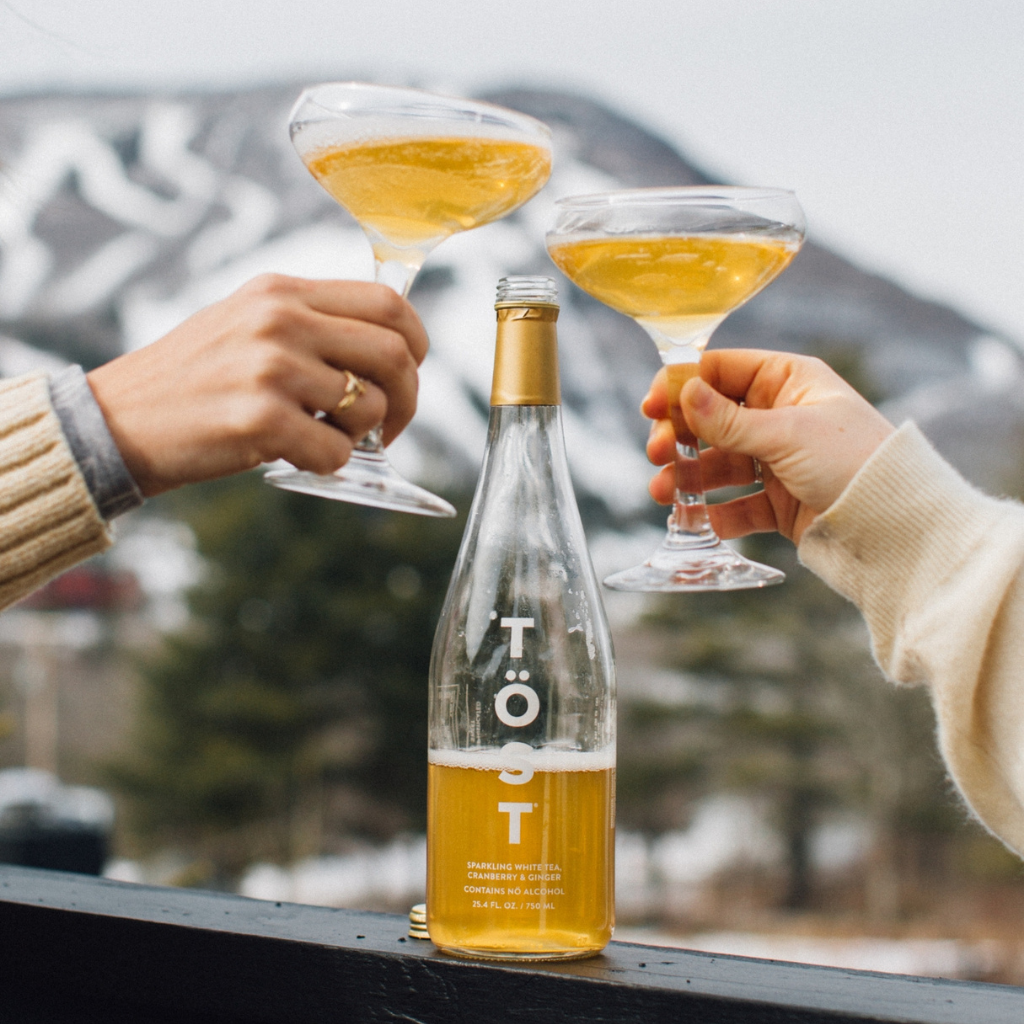
TÖST’s occasion-based design demonstrates one way the adult non-alcoholic beverage category can reach consumers in different retail environments.
By designing for rituals and moments rather than replicating specific alcoholic drinks, TÖST created a product that retailers can merchandise in multiple ways – wine sets, premium sparkling sections, or dedicated ANA displays. This flexibility helps retailers experiment with ANA placement as they figure out how to best serve the category.
For distributors, TÖST’s state-by-state growth shows how proven performance data across different retail placements can build confidence in ANA portfolio investment. The brand’s ability to succeed whether positioned alongside wine or in premium sparkling demonstrates how ANA products can work within retailers’ existing structures.
On-premise venues benefit when ANA beverages are designed to serve specific occasions. Products built for celebrations, food pairing, or daily rituals create natural menu opportunities for restaurants, bars, and events looking to expand their non-alcoholic offerings.
TÖST’s experience also highlights an important dynamic for category growth: ANA products don’t all need to follow the same development philosophy. Some brands focus on perfecting alcohol replication while others, like TÖST, design for the occasion itself. Both approaches serve the category.
“Variety’s the spice of life. We don’t expect consumers to only drink TÖST all the time,” Addington said. “I know that they also drink a lot of other products that are out there, and they should, because I don’t drink only one beverage in my life, and no one should.”