
Three Spirit Built Its ANA Line Around How People Want to Feel - and That Changes Everything About How You Sell It

The ANA category has spent a lot of energy helping consumers find familiar ground – drinks that taste like the alcohol they already know. Three Spirit built in the opposite direction. They started with the feeling they wanted to create in the consumer – lifted, connected, unwound – and worked backward to the ingredients. That decision has shaped everything about how they’ve had to build their market.
Meeta Gournay, Co-Founder of Three Spirit, has been working through that challenge since 2017, when she and co-founders Tati Mercer and Dash Lilley first started building the brand in the UK. What they were after wasn’t a replacement for any specific spirit. It was something harder to define – and ultimately more interesting.
Starting With the Why
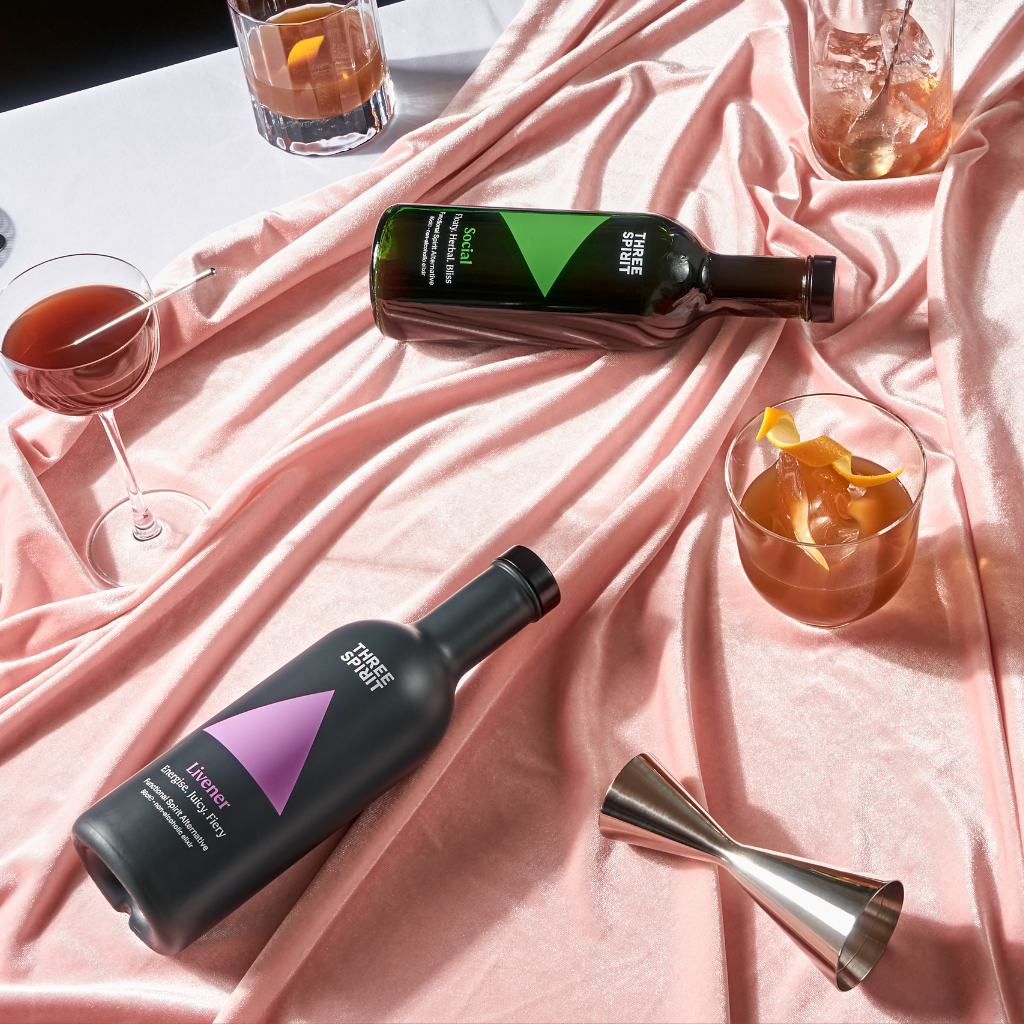
The founding question for Three Spirit wasn’t “what does a non-alcoholic gin taste like?” It was: why do people reach for alcohol in the first place?
The answer, as Meeta and her co-founders worked through it, was that alcohol has always been the default vehicle for something much more primal – the human desire to shift your state. To feel more open, more energized, more at ease. Celebration, social connection, winding down at the end of a long day – these are the actual needs alcohol serves. And if you could design a product that addressed those needs directly, without alcohol, you’d have something genuinely new.
“Non-alcoholic should not be defined by what it lacks,” Meeta told me during our conversation. “It’s much more about heightening your moment – and having a more benefit-led proposition.”
That reframe – from absence to presence, from what’s removed to what’s offered – became the foundation for the product line Three Spirit built.
Three Products, Three States
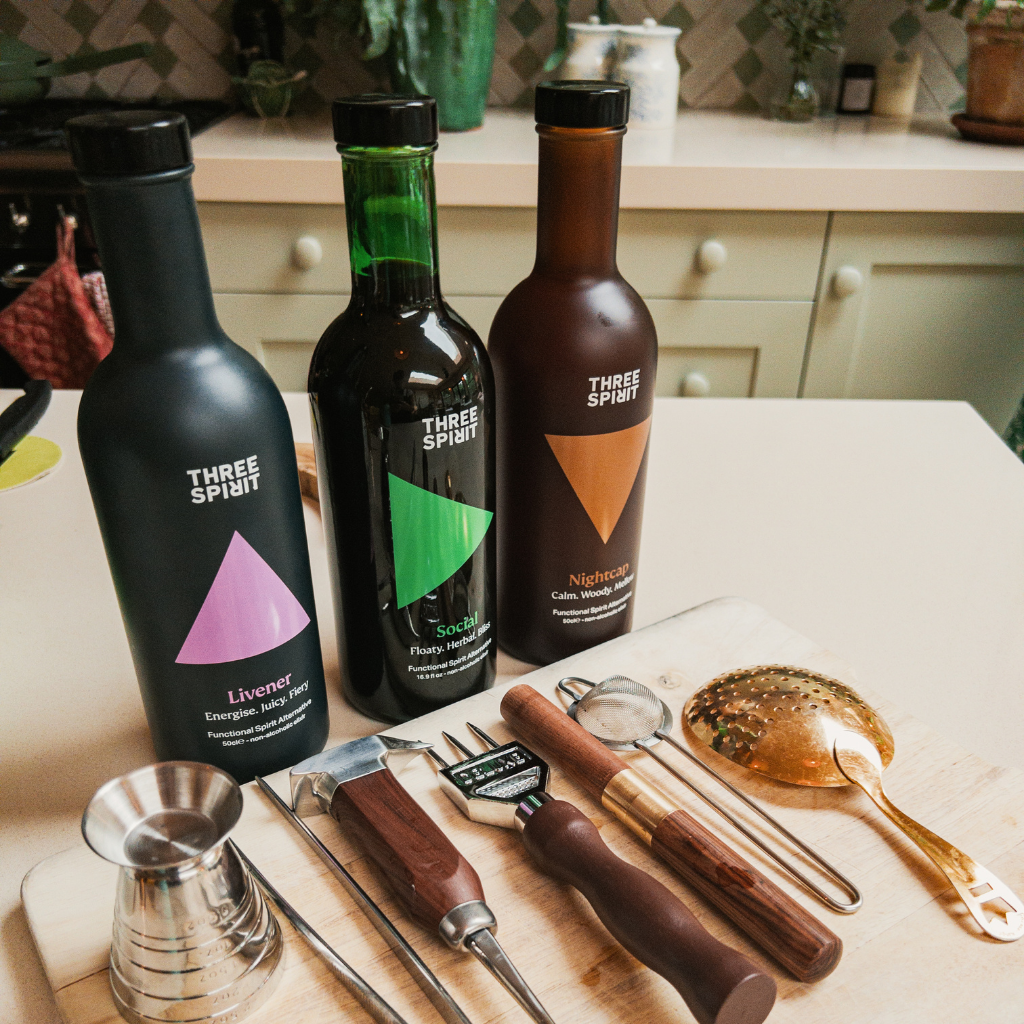
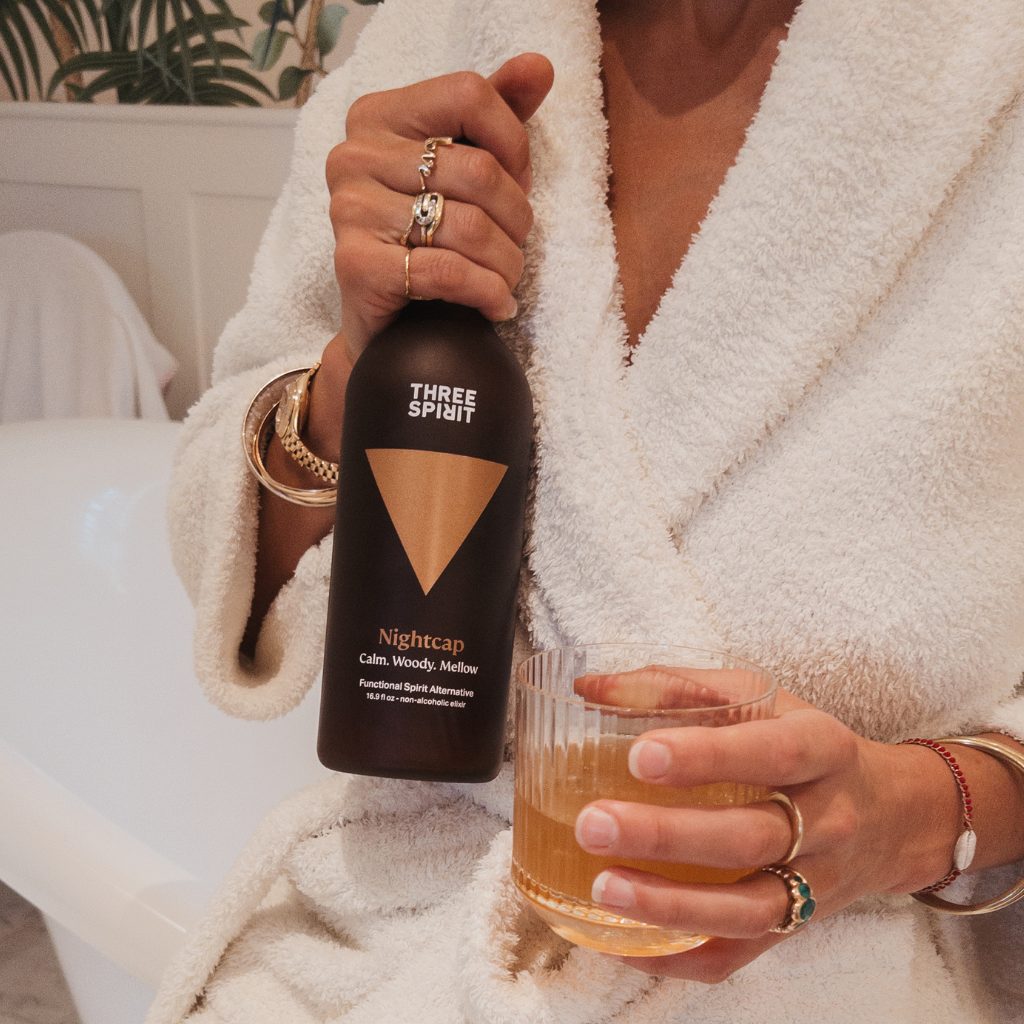
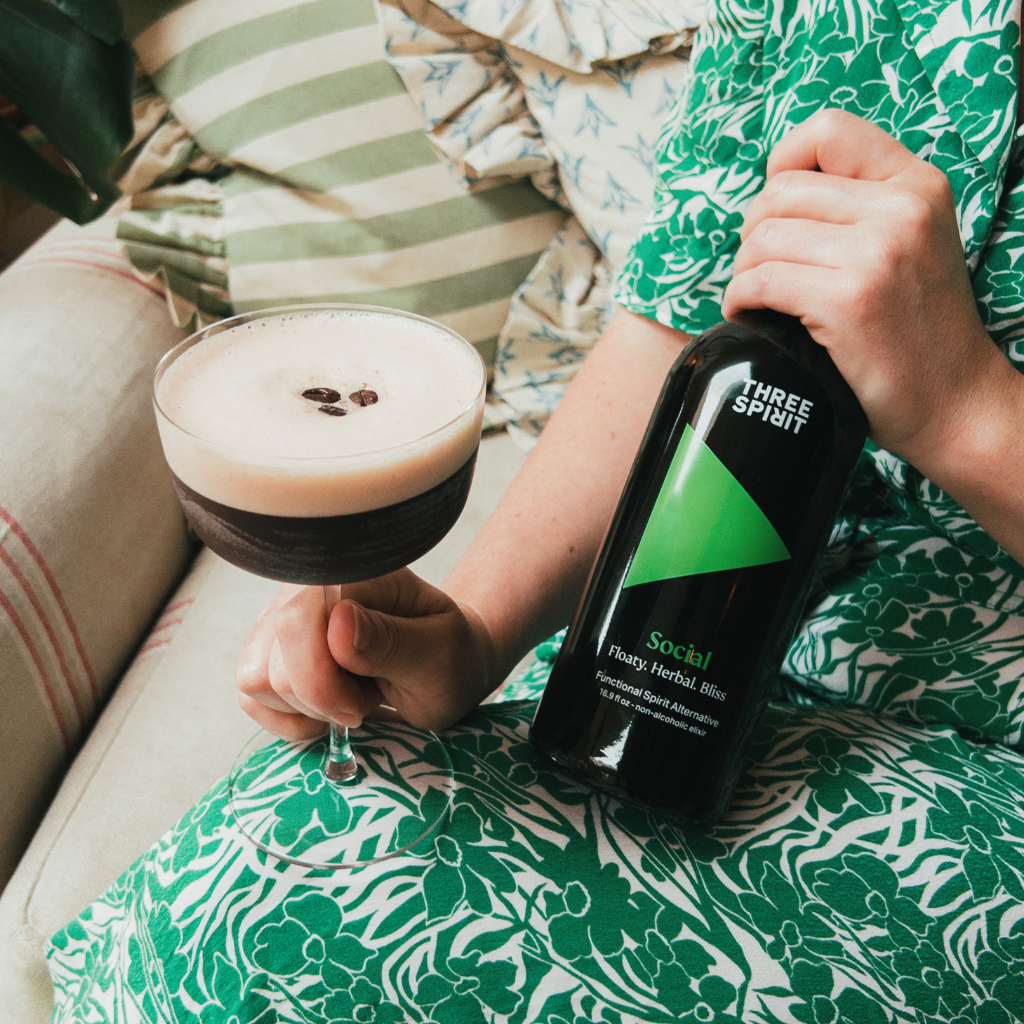
The result is a lineup of three ANA botanical elixirs, each mapped to a specific feeling and occasion. Livener, built around ingredients such as guayusa and schisandra berry, is designed for a lift – an aperitif-style drink for the start of a night. Social Elixir, featuring ingredients such as lion’s mane and cacao, is built for connection and openness – the kind of energy you want in the middle of a good evening. Nightcap, anchored by ingredients such as valerian root, is designed to help people unwind – a slow-sipper suited to the end of a night.
To build the functional ingredient stack, Three Spirit assembled a cross-disciplinary team: a plant scientist, a herbalist, a phytochemist, an ethnobotanist, and bartenders. The process was genuinely iterative – and not every ingredient made the cut. “I remember trying kava,” Meeta said, “and my mouth was totally numb as I was driving home from a tasting session.” Ingredients had to work functionally, hold up under regulatory scrutiny – particularly for the UK launch, where novel food regulations shaped what they could and couldn’t use – and ultimately taste good enough to drink.
What came out of that process is a product line that doesn’t slot neatly into any existing spirit category. There’s no familiar shorthand to borrow. And that’s precisely what makes the trade education challenge both harder and more important.
Selling Something the Trade Has Never Seen Before
When you’re selling an ANA product with a clear analog – a gin, a whiskey, a sparkling wine – you can lean on consumer understanding that already exists. The trade knows how to position it, how to menu it, how to talk about it. Three Spirit doesn’t have that. Their products ask distributors, bartenders, and buyers to learn something new: what adaptogens and nootropics are, what lion’s mane does in a drink, why valerian root belongs in an evening pour.
“Education takes more time and effort than you ever anticipate,” Meeta told me. “You find yourself repeating things over and over.” But Three Spirit has developed a set of approaches that are working.
One of the more effective has been making the ingredients physically present in trade education settings. Bringing fresh lion’s mane mushrooms and cacao pods to launch events – letting bartenders hold them, smell them, ask questions before anything is poured – grounds the abstraction in something real. Three Spirit has also run mushroom workshops with distributors, bringing in bartenders to explore the functional properties of key ingredients alongside the products themselves. When a trade partner has held the ingredient, the conversation about what it does in the drink is a different conversation.
Cocktail naming has become part of the education toolkit too. The cocktail names Three Spirit suggests for on-premise use don’t just identify the product – they signal the occasion and the intended effect. A Lively Margarita. A Party Paloma. A Magic Mule. The names do some of the education work before a word of explanation is needed, giving bartenders a language for the product that connects with how consumers actually think about what they want from a drink.
The broader content strategy – ingredient education, product storytelling, entertainment-forward short-form – works best when it travels through the trade’s own networks. When distributors share that content with their own accounts, it extends the reach of the education conversation beyond what any brand can do on its own. That kind of trade advocacy is a meaningful signal that something is clicking.
How the Market Is Starting to Reflect It
The merchandising evolution in retail tells the story of a category finding its footing. Three Spirit was initially placed with mixers. Then came end caps featuring the best ANA options across beer, wine, and spirits. Now Meeta is seeing dedicated sections organized around function and occasion – ANA products merchandised alongside other functional beverages, with clearer on-shelf messaging about what they do and when to reach for them.
“It’s more important to demonstrate benefits on the shelf,” she said. The products are there. The retail language is still catching up.
On-premise, the shift shows up differently. ANA-focused bars are building menus entirely around functional drinks. And placement within conventional menus turns out to matter more than most operators realize. Three Spirit has seen meaningfully different sales depending on where they land – being positioned right after the top-performing alcoholic drink on a menu, labeled as “feel-good drinks,” changes the ordering conversation entirely.
“It’s akin to whether you’re in the back of the store collecting dust, or in the front with clear messaging,” Meeta said. “That’s changed massively for the category.”
What the Category Gets When Function Actually Delivers
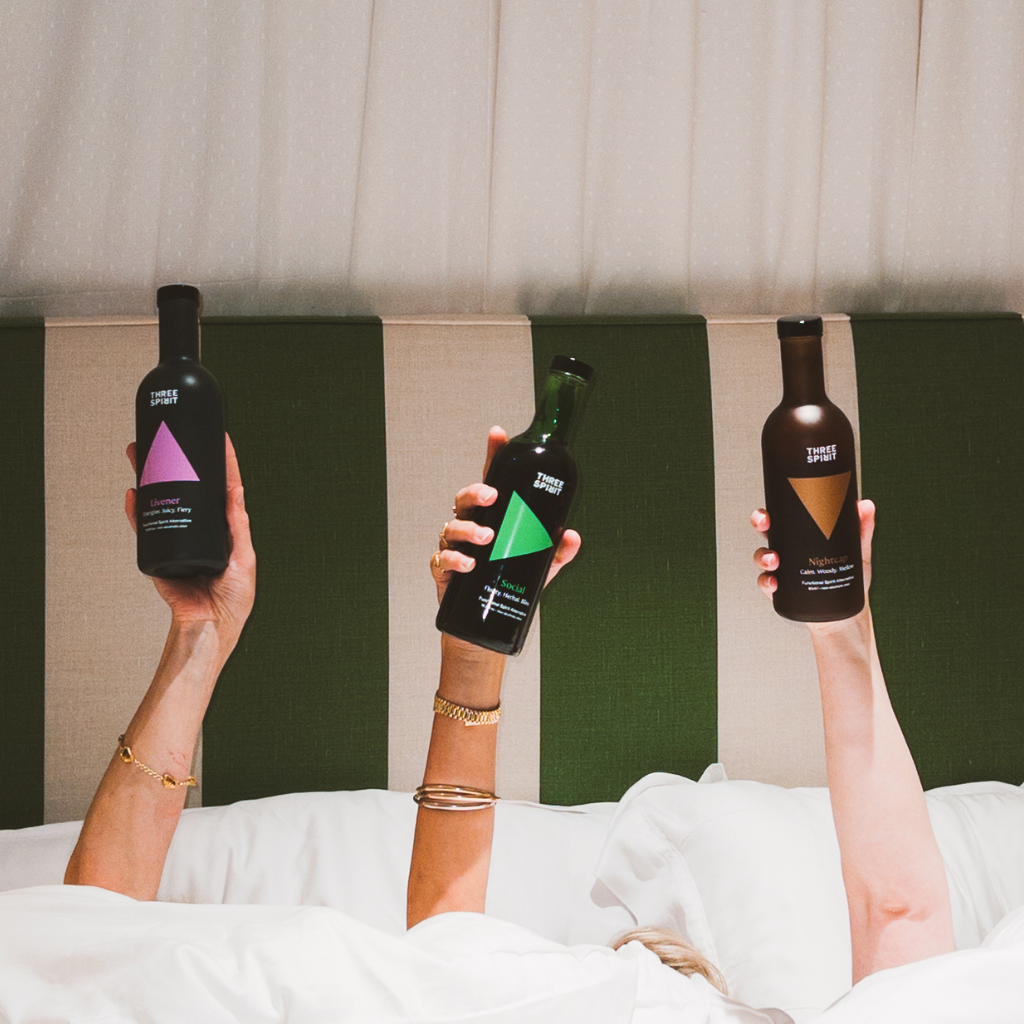
One of the patterns that emerges when functional-first ANA products start delivering on their promise is a different kind of consumer relationship. “When people try it, they’re often like, wow, I didn’t expect that,” Meeta said. The surprise isn’t just about flavor. It’s that the drink actually does something. And that combination – a genuine sensory experience plus a real functional effect – creates repeat purchase driven by something more durable than novelty or occasion.
Part of the ANA category’s next growth story isn’t built on curiosity or a dry month – it’s built on how a drink makes you feel. That’s a meaningfully different consumer proposition, and it requires a different kind of trade relationship to support it – one where distributors, bartenders, and buyers understand what the product does well enough to sell it on those terms.
Three Spirit has been building that case since 2017 – through the product itself, through hands-on trade education, and through the retail and on-premise positioning work that’s still ongoing. The fact that the market is beginning to organize around function and occasion didn’t happen by accident – it’s because of the foundational education work leading brands have been doing for years.

Marcos Salazar
Marcos Salazar is the CEO of the Adult Non-Alcoholic Beverage Association. Connect with him on LinkedIn.
The ANA Insider
News, Insights, Events, & Jobs for the Adult Non-Alcoholic Beverages Industry
Join our community of over 10,000 industry professionals receiving the exclusive newsletter from the Adult Non-Alcoholic Association (ANBA).
Each newsletter delivers:
- Insights data in the ANA beverage landscape
- A round up the most important news and headlines
- Breaking news from ANBA members and new product launches
- Business webinars, industry events, and jobs at leading ANA companies