
Ariel Vineyards Spent 40 Years Building the ANA Wine Category. Its Rebrand Is for the Consumers Who Just Arrived.
The brand that pioneered ANA wine didn’t need a rebrand to prove its credibility. It needed one to introduce itself to the consumers it had spent four decades making room for.
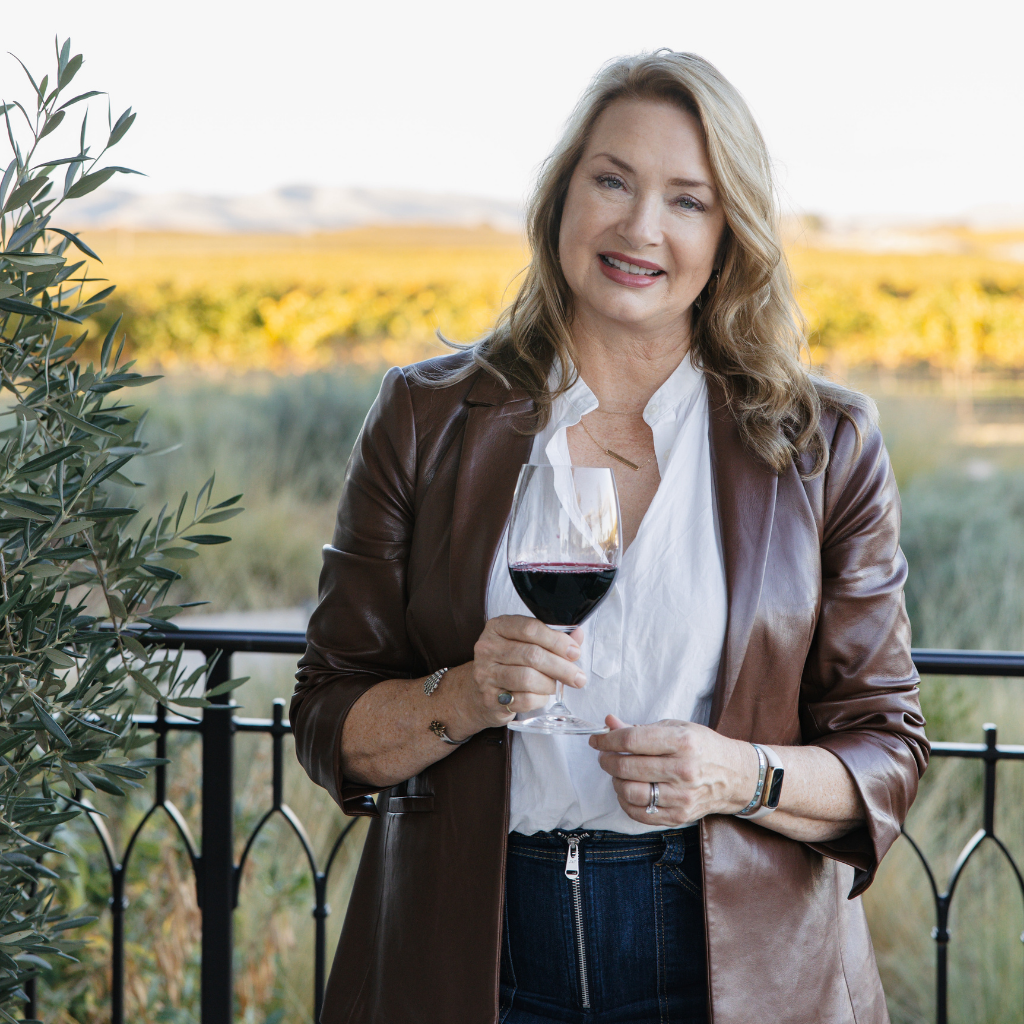
When Cynthia Lohr, Co-Owner and Chief Brand Officer of J. Lohr Vineyards & Wines, talks about Ariel Vineyards, she doesn’t start with the rebrand. She starts in 1985 – when her father Jerry Lohr and his winemakers patented a reverse osmosis process to gently remove alcohol from fully fermented wine, and launched a brand using a patented process that would define how premium ANA wine was made. The brand took its name from Ariel, the light and airy spirit in Shakespeare’s The Tempest – a deliberate choice that shaped everything from the packaging to the positioning. “We’re the OG,” she told me during our conversation, with the kind of quiet confidence that comes from four decades of proof.
At its peak, Ariel carried seven SKUs, moved 80,000 to 100,000 cases annually, and built a loyal direct-to-consumer following at a time when the phrase “adult non-alcoholic wine” would have drawn blank stares from most buyers. For forty years, Ariel built its following before the consumer demand fully existed. That demand has now arrived.
The Consumer Ariel Was Building For
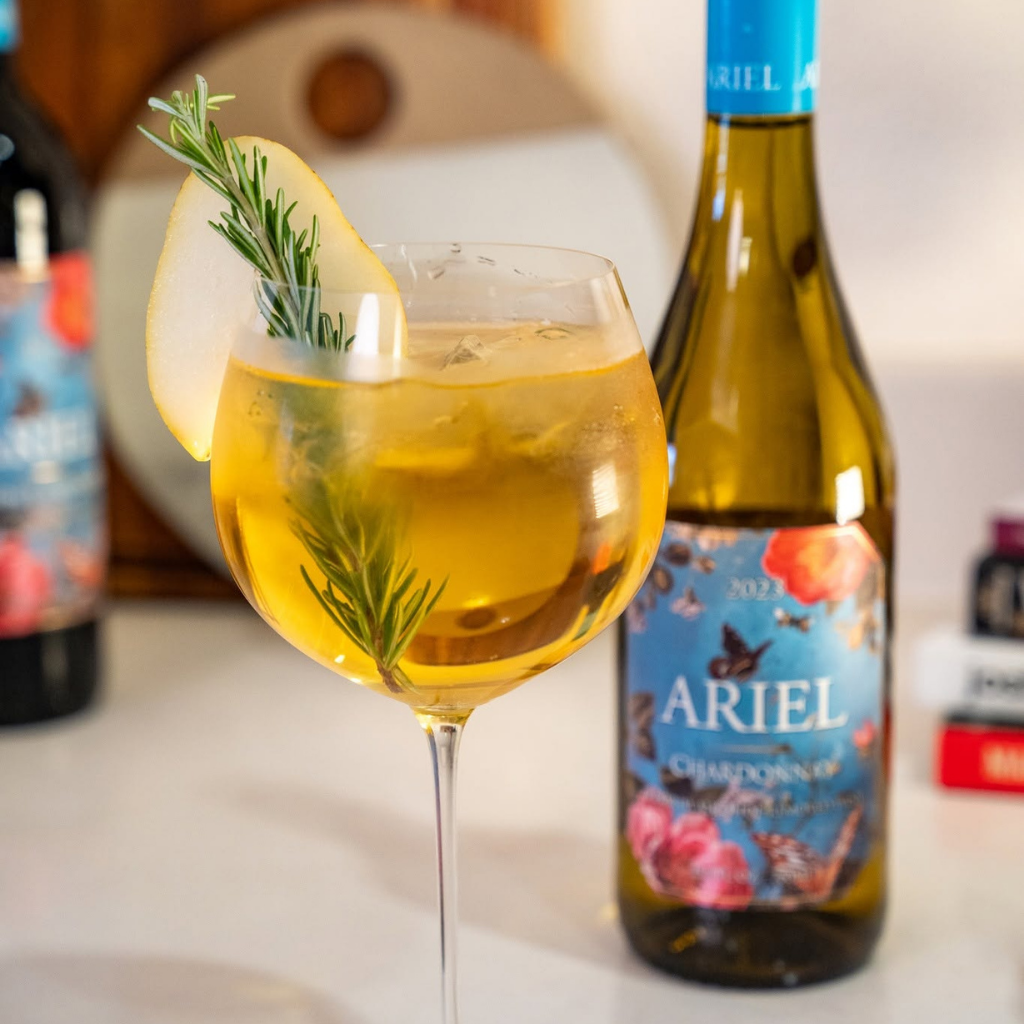
The ANA category’s largest untapped opportunity isn’t the consumer who has already decided to stop drinking. It’s the 94 percent of consumers who still drink alcohol but also purchase adult non-alcoholic beversges to extend occasions, pace themselves, or stay in the ritual of the glass longer.
Zebra striping – moving between alcoholic and ANA beverages across a single occasion – is one of the category’s biggest opportunities, and it’s one Ariel is building toward directly. “If you’re gathering for five hours over a barbecue in the summer, you may not want to be drinking anything with alcohol the entire time,” she said. “It’s a really beautiful awakening of opportunity.”
For Cynthia, the inclusivity dimension is just as important as the moderation opportunity. One of the things she hears most from consumers is how much it means to feel included in the ritual of the moment – the toast, the special feeling in the glass – when others around them are drinking alcohol. “Whether you’re out on a girls’ weekend visiting a winery, we’re fortunate that we can offer something special to guests that won’t compromise the moment – that elevate the moment because of this inclusivity,” she said. It’s feedback she told me she personally cherishes.
Understanding that consumer is what drove every decision in the rebrand.
A Package Designed for That Moment
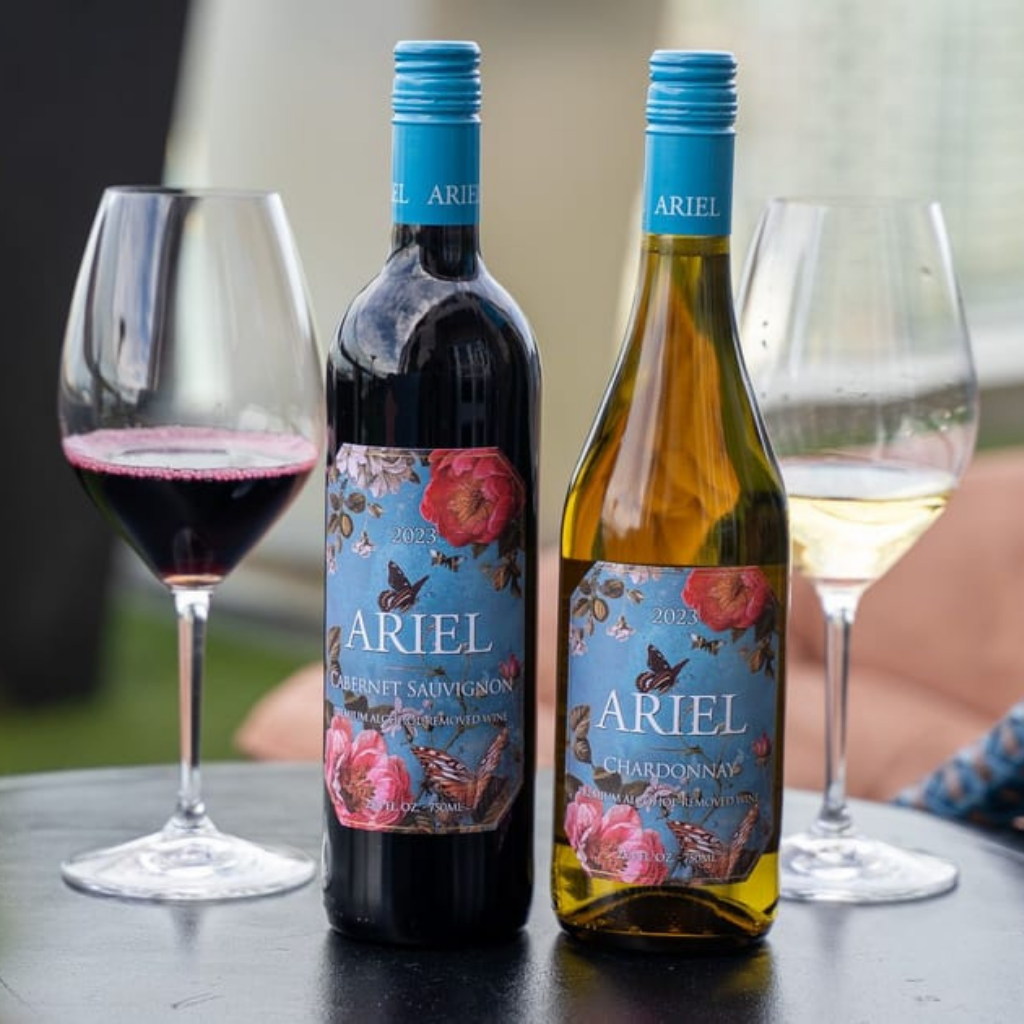
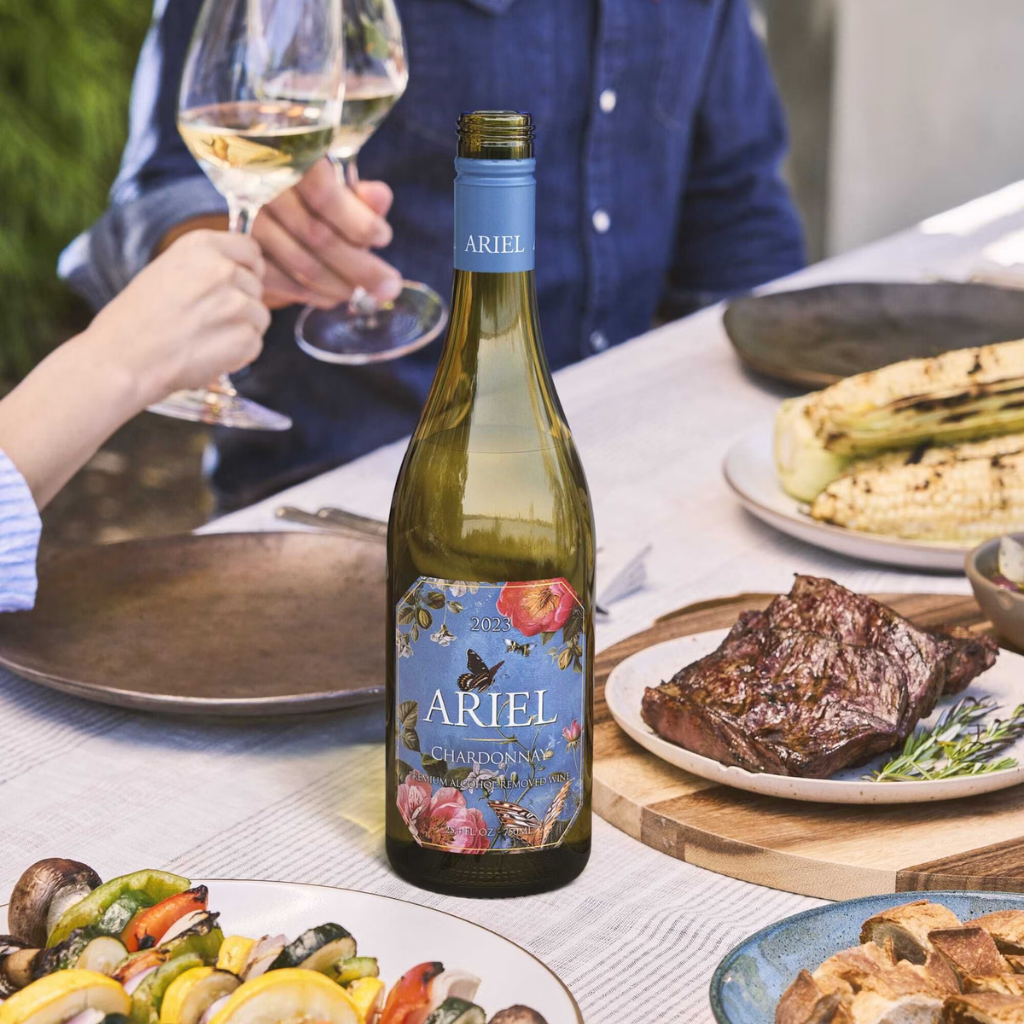
When Ariel decided to rebuild its packaging from the ground up, the timing couldn’t have been more pointed. The category was finally arriving, and the brand that created the ANA wine category saw an opportunity to meet new consumers in a new way. The previous label featured a swirl or swish design intended to evoke lightness and lift – a visual language that made sense for its time. The new moment called for something different.
The design brief started with a specific consumer need: someone choosing an ANA wine shouldn’t feel like they’re settling. They should feel like they’re choosing something special. The team went deep into consumer research before touching a single design element, and what they found shaped every decision that followed. Botanical elements – flowers, natural imagery – carry strong associations with health and well-being, and function as a powerful visual signal before a word is read. After working through many label concepts, the team landed on vivid botanical illustrations, butterflies, and a bright blue ground. “We were just mesmerized by the bright blue, the feeling of this uplifted moment where you could enjoy something that feels like a luxury, that is without alcohol,” Cynthia told me.
The result is a package that does what the previous one couldn’t: it arrives on shelf with the same confidence the consumer it’s designed for brings to the moment. “It’s a revolution versus an evolution,” Cynthia said. The new packaging doesn’t whisper. It arrives.
The early returns are measurable. Ariel’s total sales are up 15.3% year over year. At Kroger, the brand has grown 306% according to IRI Circana data. For a brand that spent decades building in relative quiet, those numbers reflect something the new packaging unlocked – a consumer who was ready, and a bottle that finally said so.
Trusted Advocates as the Bridge to New Consumers
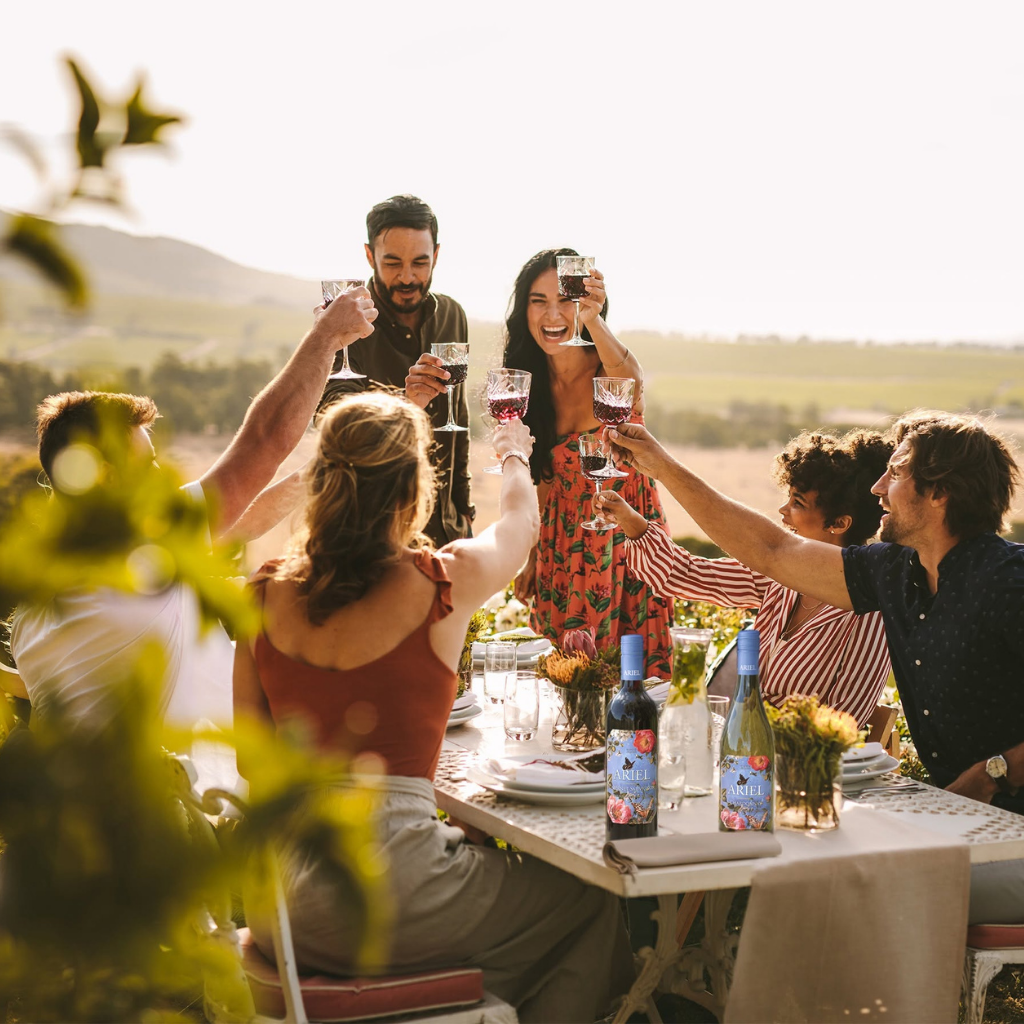
Strong packaging draws existing shoppers in. Getting new consumers to reach for an ANA wine in the first place requires presence in the right channels, at the right moments, with the right voices.
Ariel is building that presence across retail activations, fairs and festivals, and a wine mocktail program on the brand’s site. But one of the more distinctive moves is a partnership with celebrity chef Russell Jackson – a Top Chef alumnus and Ariel consumer since 1989 – who is launching Unity Market, a farm stand and curated bites concept in concert with the Central Park Conservancy in New York. When I asked her about the partnership, Cynthia was clear about why it works: “It’s a perfect way that we can collaborate in a values and purpose-driven way to extend Ariel’s reach, to do some education, to bring people in.” Jackson has been drinking Ariel for nearly four decades. His farm-to-table positioning and New York profile make him a natural bridge to urban consumers already oriented toward quality and intention in what they eat and drink.
Flavor Language as the Next Category Infrastructure Investment
Packaging and trial channels bring consumers to the bottle. Keeping them – and building a broader ANA wine habit – depends on something the category is still developing: a shared language for what these wines actually taste like.
Ariel is investing in closing that gap. The brand is collaborating with educator and journalist Deborah Parker Wong, who is developing flavor profile information for ANA beverages with Gen Z and Millennial consumers. “The more we can talk about food pairings, the more we can talk about enjoyment occasions, the more we can talk about flavor profiles, will only help the category win even more so,” Cynthia said. It’s the kind of infrastructure work that benefits every ANA wine brand, not just Ariel – and it reflects a category-builder’s orientation that has defined the brand since the beginning.
Forty years ago, Ariel Vineyards built a product for a consumer who didn’t fully exist yet. The category it helped create is now one of the fastest-growing segments in adult beverage. The rebrand isn’t a reinvention – it’s an introduction. And the consumers finally arriving at this category will find a brand that has been ready for them for a very long time.

Marcos Salazar
Marcos Salazar is the CEO of the Adult Non-Alcoholic Beverage Association. Connect with him on LinkedIn.
The ANA Insider
News, Insights, Events, & Jobs for the Adult Non-Alcoholic Beverages Industry
Join our community of over 10,000 industry professionals receiving the exclusive newsletter from the Adult Non-Alcoholic Association (ANBA).
Each newsletter delivers:
- Insights data in the ANA beverage landscape
- A round up the most important news and headlines
- Breaking news from ANBA members and new product launches
- Business webinars, industry events, and jobs at leading ANA companies