
Everleaf Built Its Brand One Bar at a Time - and That's Exactly the Point
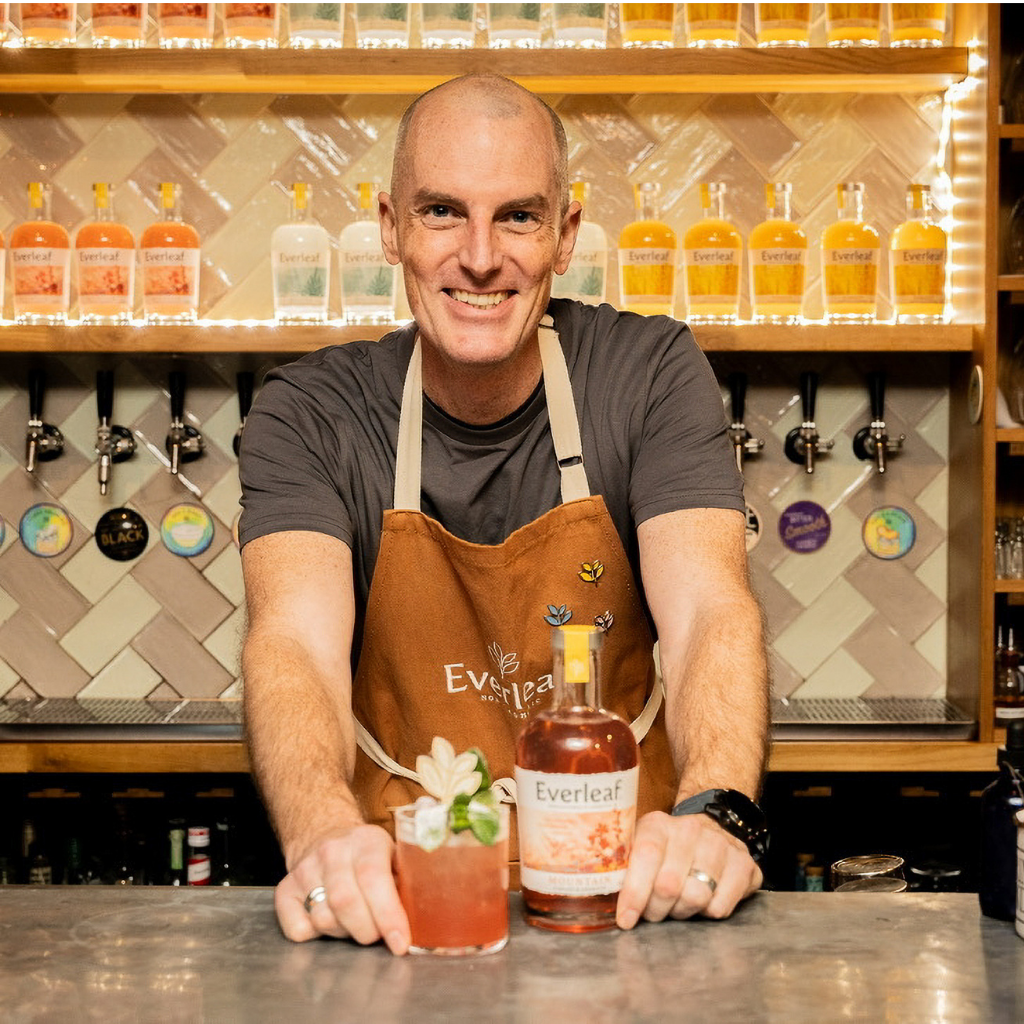
When Paul Mathew launched Everleaf in 2018, he spent the first six months personally delivering bottles to bars and restaurants in London. Not shipping them. Hand-delivering them.
That decision wasn’t a scrappy startup workaround. It points to something the ANA category is still working out: for products with genuine flavor complexity, discovery doesn’t happen on a shelf. It happens across a bar counter, with a bartender in the conversation.
When the Product Is the Story, Retail Can't Tell It

One of the most interesting channel questions in the ANA category right now is how complex, flavor-forward products find their consumer. A bottle with a sophisticated flavor profile and an unfamiliar story needs more than shelf space to land – it needs someone to bridge the gap between what’s in the glass and why it’s worth trying.
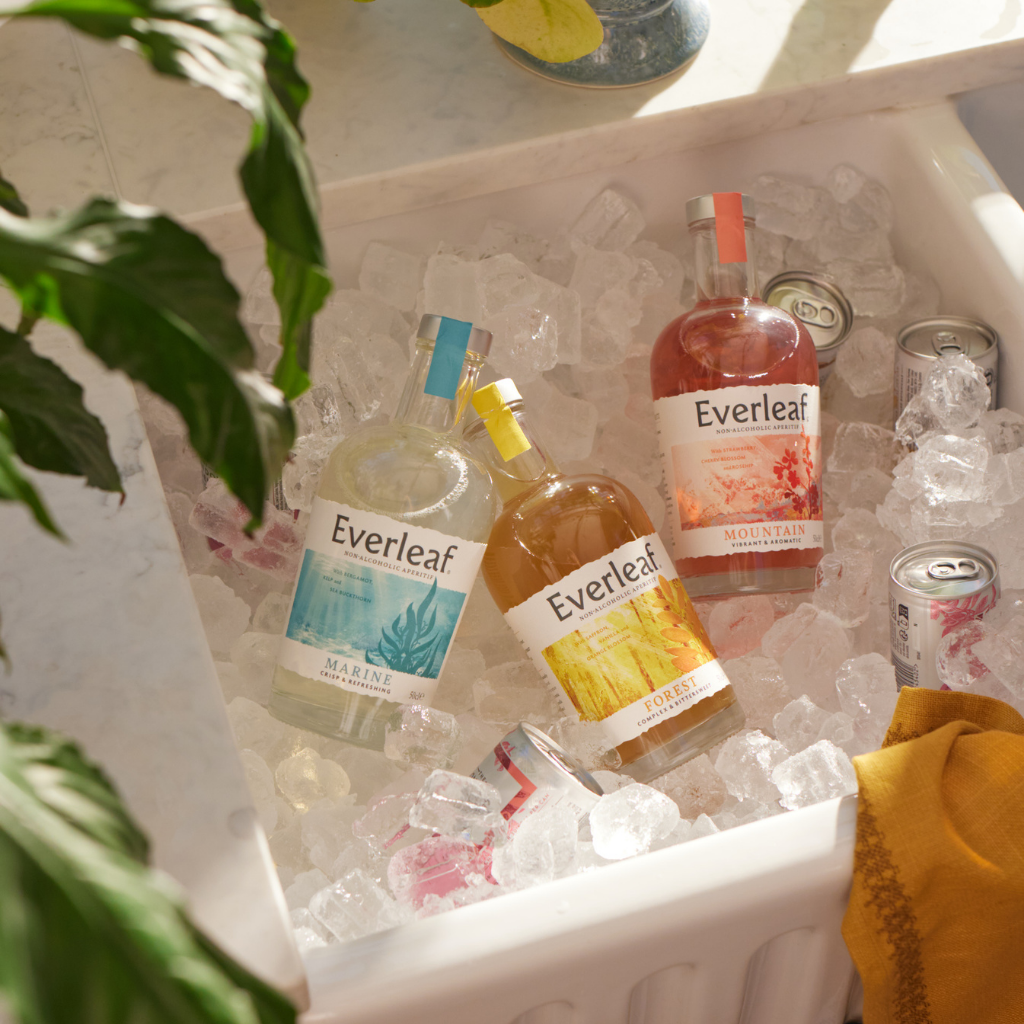
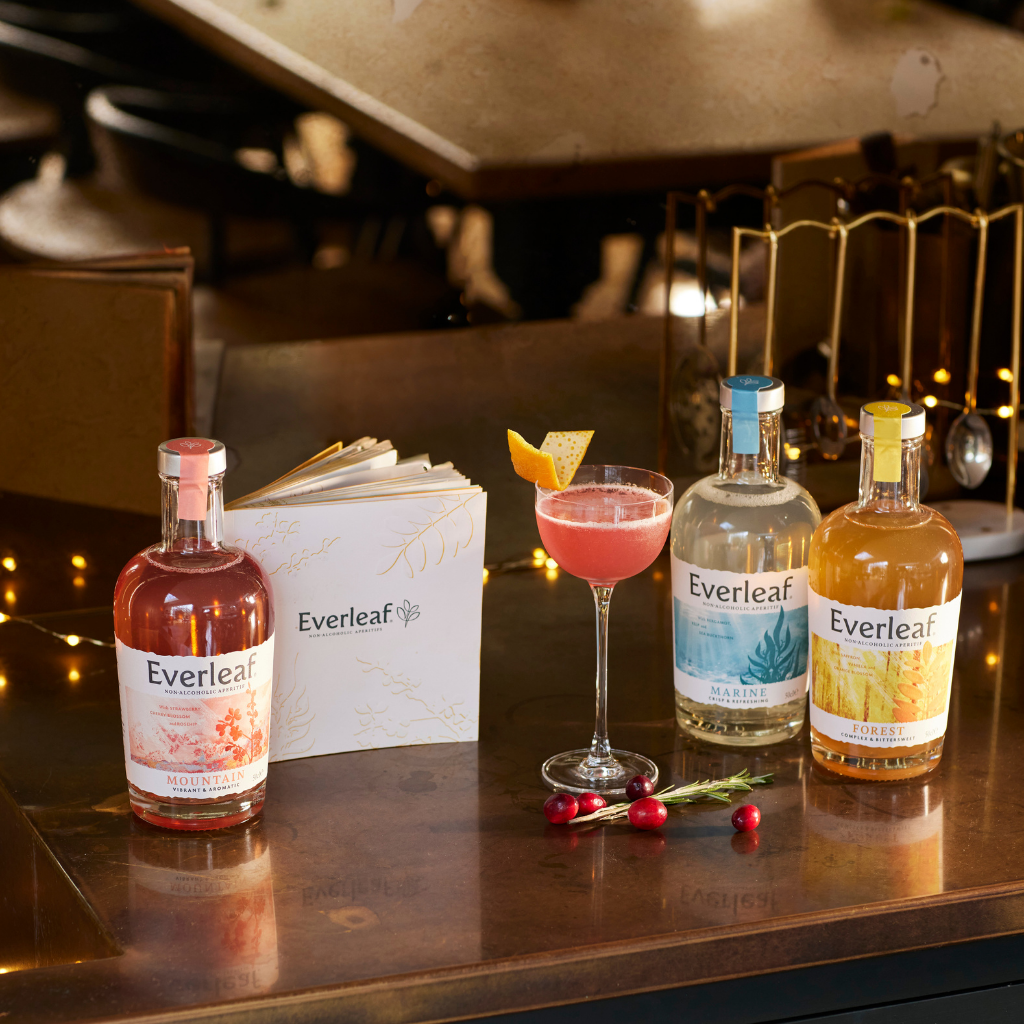
Everleaf makes three ANA aperitifs – Marine, Mountain, and Forest – each built around a distinct botanical biome. Marine draws on seaweed, umami, citrus, and olive. Mountain reaches toward floral blossom, rosehip, cherry blossom, and high-altitude herbs. Forest moves through vanilla and orange blossom down to earthy, bittersweet ginshin root.
These are not spirit analogs. Paul, who brings 30 years of bartending and a background in botany and conservation to the brand, made that choice deliberately. “Gin without alcohol is to never be quite as much as the original product,” he told me during our conversation. “Whereas starting from the ground up, we’ve been able to build flavor profiles that are as strong and as unique within the drink space as any other category. It’s not about being something without – it’s being something with as much flavor as any of the other options.”
That philosophy produces something genuinely complex. And complexity, it turns out, is very hard to sell from a shelf.
“The big challenge has always been to communicate what they are,” Paul explained. “If you’re a consumer that’s not familiar with them – what are these? What are they going to taste like? Am I willing to spend 20 pounds, 30 dollars on a bottle to find out?”
The on-trade solves that problem in a way retail simply cannot. A bartender can introduce a consumer to Everleaf Forest in a cocktail before they’ve ever read the label. The product earns trust through experience rather than through packaging copy that no casual shopper has time to decode.
The Channel That Does the Work Discovery Requires
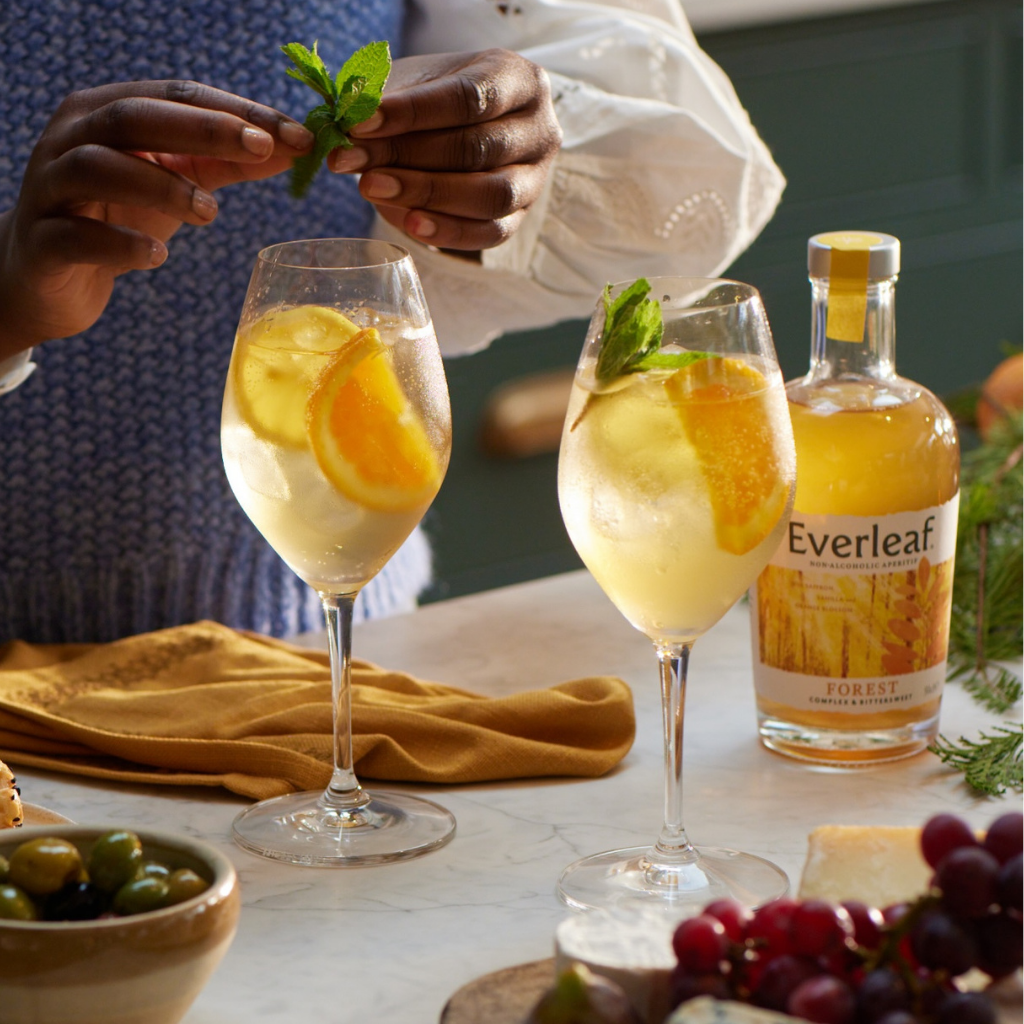
For complex ANA products, the bar counter functions as something retail locations never can: an active point of education. Bartenders taste, contextualize, and advocate in real time. That’s not a marketing function – it’s a discovery function, and it’s one the category hasn’t fully reckoned with yet.
“Bartenders are looking for interesting flavors, they love complexity, they like the stories that we’re telling,” Paul said. “They like having a product that is something they can do unique things with.”
That bartender enthusiasm has produced something Paul considers a meaningful signal: Everleaf regularly ends up in alcoholic cocktails alongside its ANA applications. Bartenders aren’t using it because they need to offer something for non-drinkers. They’re using it because it’s a good product – full stop. “The fact that we’re in a lot of alcoholic cocktails as well as non-alcoholic cocktails has always been a badge of honor for me.”
That crossover reach matters for the category more broadly. When an ANA product earns placement on the basis of flavor rather than function, it stops being a niche accommodation and starts being a serious ingredient. That’s a different conversation entirely for on-premise operators who have historically been skeptical of the economics – and it’s a conversation that only happens when a product has been properly introduced.
Building Brick by Brick - and Why That Holds
The on-trade is slow. Relationships take time. Accounts are won one at a time. Paul describes it plainly: “It’s one brick at a time building the entree.”
But the economics work differently than retail in ways that reward patience. “With a grocery channel, you get these big lumps, and then you’ve got to try and drive it going out the other side,” he explained. “With the on-trade, you have a steady flow – you know that’s going to be a sale that comes in each month as people restock.”
That predictability has allowed Everleaf to grow consistently for seven consecutive years without overextending. No new SKUs, no mass retail pivot, no RTD line chasing a different channel. “We haven’t overstretched ourselves, but equally we’ve been making consistent progress,” Paul said. “Not trying to go into every country straight away, or into every grocer straight away – just building things as they come naturally.”
There’s a compounding effect to on-trade relationships that retail doesn’t replicate. Bartenders move. When they take a new role at a different venue, they bring their product knowledge and their trust in the brands they’ve worked with. “You build up a lot of goodwill, and people that move on to different bars and restaurants take that knowledge and awareness of the product with them,” Paul noted. Each relationship built doesn’t stay in one place – it travels.
What On-Premise Operators Are Starting to Understand
For years, the standard objection from on-premise operators was straightforward: why carry ANA cocktails when full-price alcoholic cocktails drive better margin?
That calculus is shifting – and it matters for how the category grows. “There’s a realization now that there is this middle ground that’s really valuable to venues,” Paul said. “Where they can make a premium cocktail, happens to be non-alcoholic, and it commands 75 to 80 percent of the cost of a regular cocktail – and that’s a trade-up, that’s a better cash margin, that’s more turnover for venues that really need every penny they can get.”
That margin story is one of the most important conversations happening in the ANA category right now. As more on-premise operators run the numbers, the resistance to stocking premium ANA products is softening. Brands that have spent years building bartender credibility – doing the slow, relational work of the on-trade – are positioned to benefit from that shift in a way that a retail presence alone never could have created.
Everleaf’s approach makes the case that for complex ANA products, the path to durable consumer adoption runs through the bartender first. The question for the category is how many brands are willing to take that route – and how many are hoping the shelf does work it was never designed to do.

Marcos Salazar
Marcos Salazar is the CEO of the Adult Non-Alcoholic Beverage Association. Connect with him on LinkedIn.
The ANA Insider
News, Insights, Events, & Jobs for the Adult Non-Alcoholic Beverages Industry
Join our community of over 10,000 industry professionals receiving the exclusive newsletter from the Adult Non-Alcoholic Association (ANBA).
Each newsletter delivers:
- Insights data in the ANA beverage landscape
- A round up the most important news and headlines
- Breaking news from ANBA members and new product launches
- Business webinars, industry events, and jobs at leading ANA companies