
Tomorrow Cellars Treats Collaboration as Infrastructure

Most emerging brands treat competitors as threats. In the ANA wine category, Tomorrow Cellars is treating them as infrastructure.
That distinction reflects something true of the ANA category broadly: it’s still early enough, and small enough, that producers helping each other often outweighs any benefit to guarding territory. Tracy Sweeney, Co-Founder of Tomorrow Cellars, came into ANA wine with decades of traditional wine experience – her first job out of college was at a major California winery, and she most recently led direct-to-consumer operations at a large global wine company. What she’s built since shows what’s possible when a producer treats that collaborative instinct as a deliberate strategy rather than an occasional courtesy.
“It’s better for all of us if we’re all successful,” she told me during our conversation. “The more that all of us are in the field engaging with consumers, being able to competently recommend one another’s products – that’s how this category grows.”
The Traditional Wine World Is Starting to Treat ANA as Wine, Not a Substitute For It
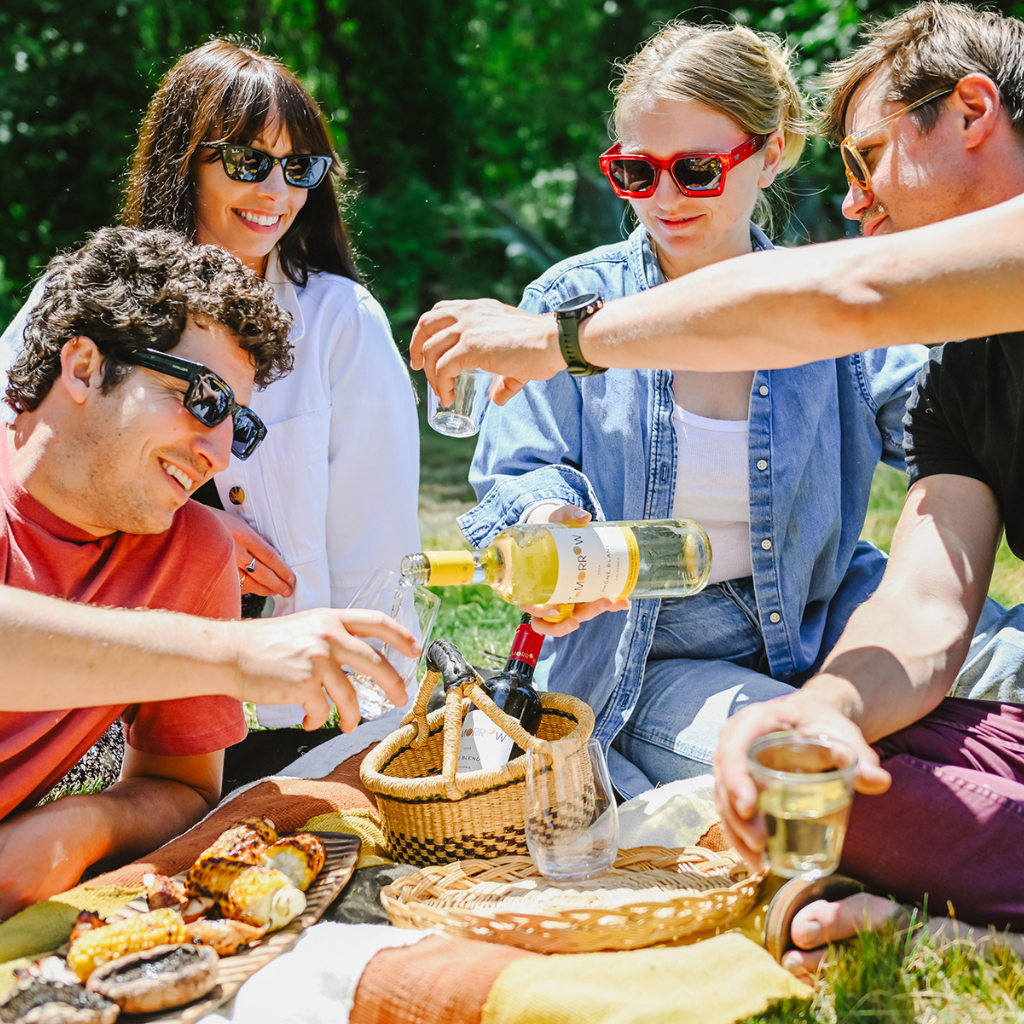
One marker of category maturity is whether the established trade – growers, sommeliers, wine press – treats ANA wine as a parallel category or as a real extension of wine itself. Tomorrow Cellars’ experience suggests the latter is becoming possible.
“We are on the wine continuum,” Tracy explained. “We’re keeping people in wine.” That framing – positioning ANA wine as expanding occasions for wine rather than replacing it – has found real traction. Growers in Napa have begun embracing ANA producers as a new home for their fruit. Traditional on-premise accounts in wine country now carry Tomorrow Cellars as their only ANA wine and go through meaningful volume. Major wine trade publications have recognized the wine alongside traditional bottlings. None of that happens unless the wine establishment is willing to evaluate ANA wine on its own terms – a shift that’s bigger than any single brand.
The Category Runs on Producers Willing to Teach Each Other
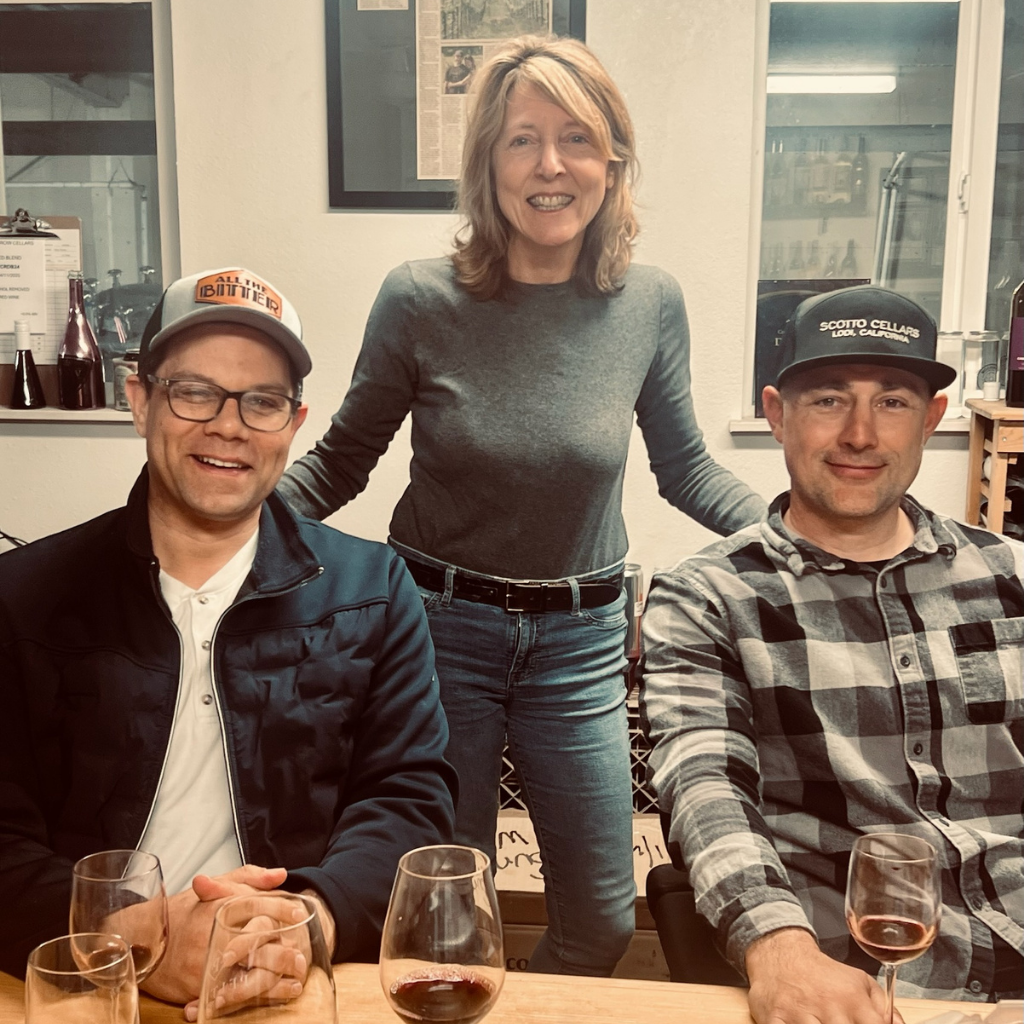
Part of what makes ANA wine collaborative rather than competitive is that the people who pioneered it are still around – and still willing to share what they learned.
When Tomorrow Cellars began developing its red wine, Tracy sought out a winemaking mentor who had created one of the category’s earliest non-alcoholic wines more than 20 years ago. His guidance shaped a juice-treatment approach right after pressing – work Tracy describes as something “no one else is doing.” That kind of direct mentorship between an established producer and a newer one isn’t an exception in ANA wine. It’s a pattern that depends entirely on people choosing to make time for it.
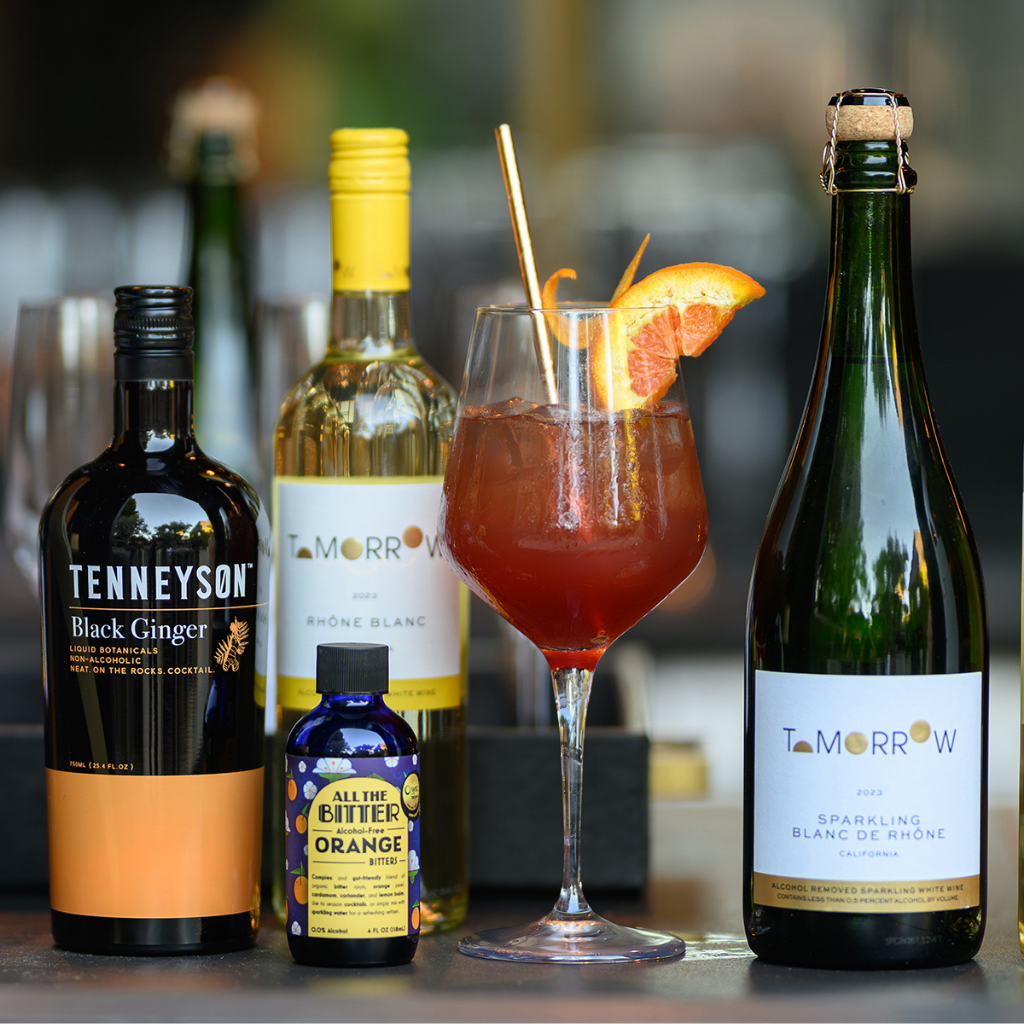
The same dynamic shows up in cross-brand product collaboration. When Tomorrow Cellars decided to create its red wine, Tracy reached out to Ian Blessing of All The Bitter – a former sommelier at The French Laundry – for feedback on how to approach a red wine in general. Ian had already been thinking about making one himself, and the conversation grew into something more: he crafted a bespoke botanical extract, made specifically for Tomorrow Cellars, that now goes into every bottle of the red. The relationship has continued well past that first project – shared events, shared retail partners, and ongoing recipe development between the two companies. Tomorrow Cellars has built similar partnerships with other producers, pairing complementary ANA products together rather than treating each brand as a closed system. At in-store tastings, Tracy actively recommends other ANA brands to consumers who came in looking for something else entirely. “I know enough about these brands that I feel like I can be their voice when I’m at one of my own consumer events,” she said.
Cross-Brand Collaboration as a Deliberate Growth Channel for the Category
The biggest constraint on ANA growth right now isn’t disinterest – it’s awareness. Most potential consumers simply don’t know what’s available to them. That gap is also where the opportunity sits: ANA brands that show up together, in person, in contexts where trial feels low-stakes, can close it faster than any one brand working alone.
At a non-alcoholic members club in Manhattan, Tomorrow Cellars hosted a food pairing event built around discovery rather than selling. “We’re not in there selling them on Tomorrow Cellars,” Tracy said. “We’re actually allowing them to experience these products in a beautiful setting.” The Napa Valley Marathon offered a similar opening – sampling runners at the finish line. “So many people said, I wish I knew about these. I didn’t know that you could get beautiful non-alcoholic wines,” Tracy recalled.
That response is the clearest evidence of the awareness gap Tracy is describing – and it’s exactly why she sees collaboration as functional, not just friendly. “All of us helping remove any friction that consumers have to dipping a toe in this new category,” she said. “The only way this works is if we’re all out there cross-pollinating each other’s brands and bringing in new consumers to the mix.”
What This Means for Where ANA Wine Is Headed
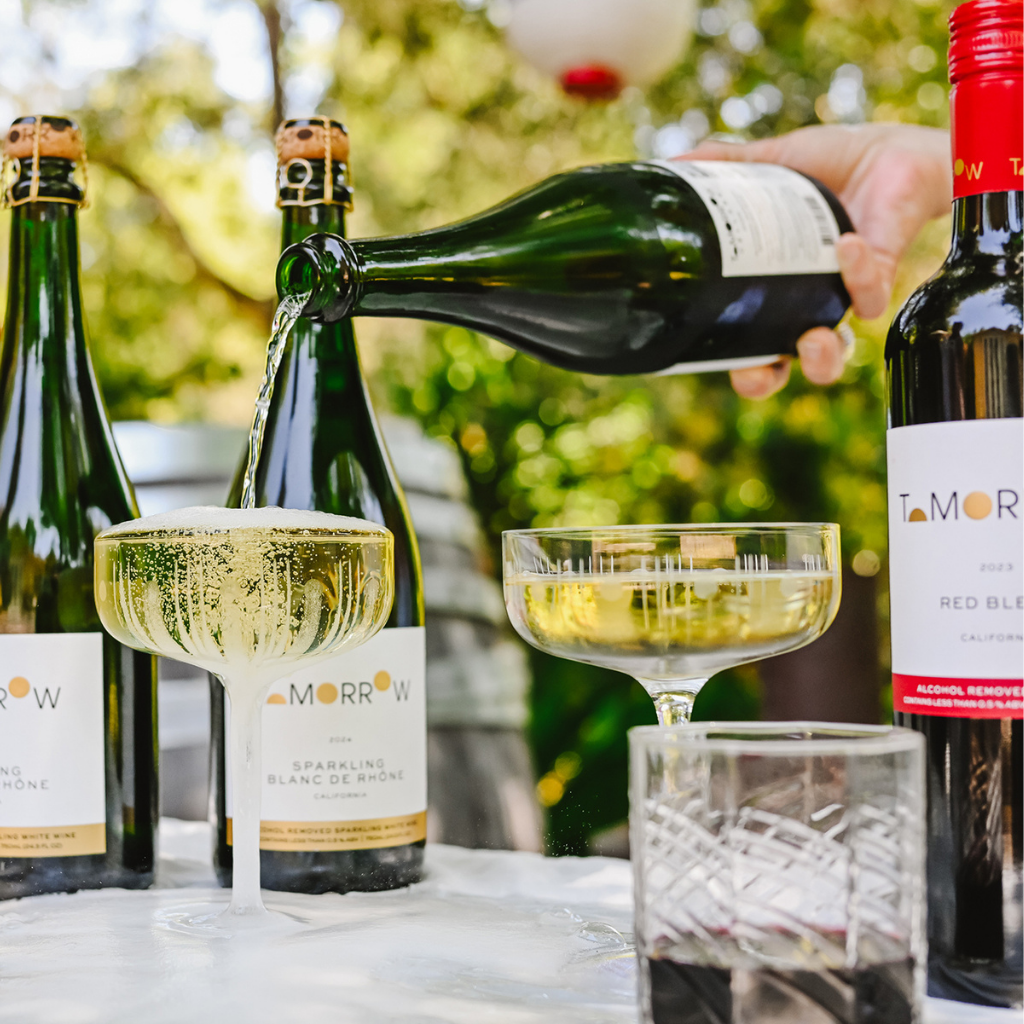
Tomorrow Cellars is still a lean operation, with three SKUs and a growing list of accounts on both coasts. But the model Tracy is building – treating mentorship, product collaboration, and joint consumer events as standard practice rather than exceptions – points to where the category is headed as more producers enter.
Tracy traces a direct line from the ANA wine pioneers who came before her to the brands that will follow. “I couldn’t be doing what we’re doing today if those brands didn’t exist,” she said of the early movers in ANA wine. She hopes Tomorrow Cellars will do the same for the next generation of producers: “It’d be really fun someday if someone says they exist today because brands in the ANA wine space were willing to invest in making really quality wines so people knew it was possible.”
Tracy’s approach points to a real opportunity for ANA wine: producers who share knowledge, build partnerships, and open consumer access to each other are creating more chances for people to discover the category exists at all – which is exactly the gap standing between ANA wine and its next stage of growth.

Marcos Salazar
Marcos Salazar is the CEO of the Adult Non-Alcoholic Beverage Association. Connect with him on LinkedIn.
The ANA Insider
News, Insights, Events, & Jobs for the Adult Non-Alcoholic Beverages Industry
Join our community of over 10,000 industry professionals receiving the exclusive newsletter from the Adult Non-Alcoholic Association (ANBA).
Each newsletter delivers:
- Insights data in the ANA beverage landscape
- A round up the most important news and headlines
- Breaking news from ANBA members and new product launches
- Business webinars, industry events, and jobs at leading ANA companies