
Mockly Didn't Rebrand to Look Better. It Rebranded to Be Understood — and Then Let New Orleans Do the Rest of the Selling.
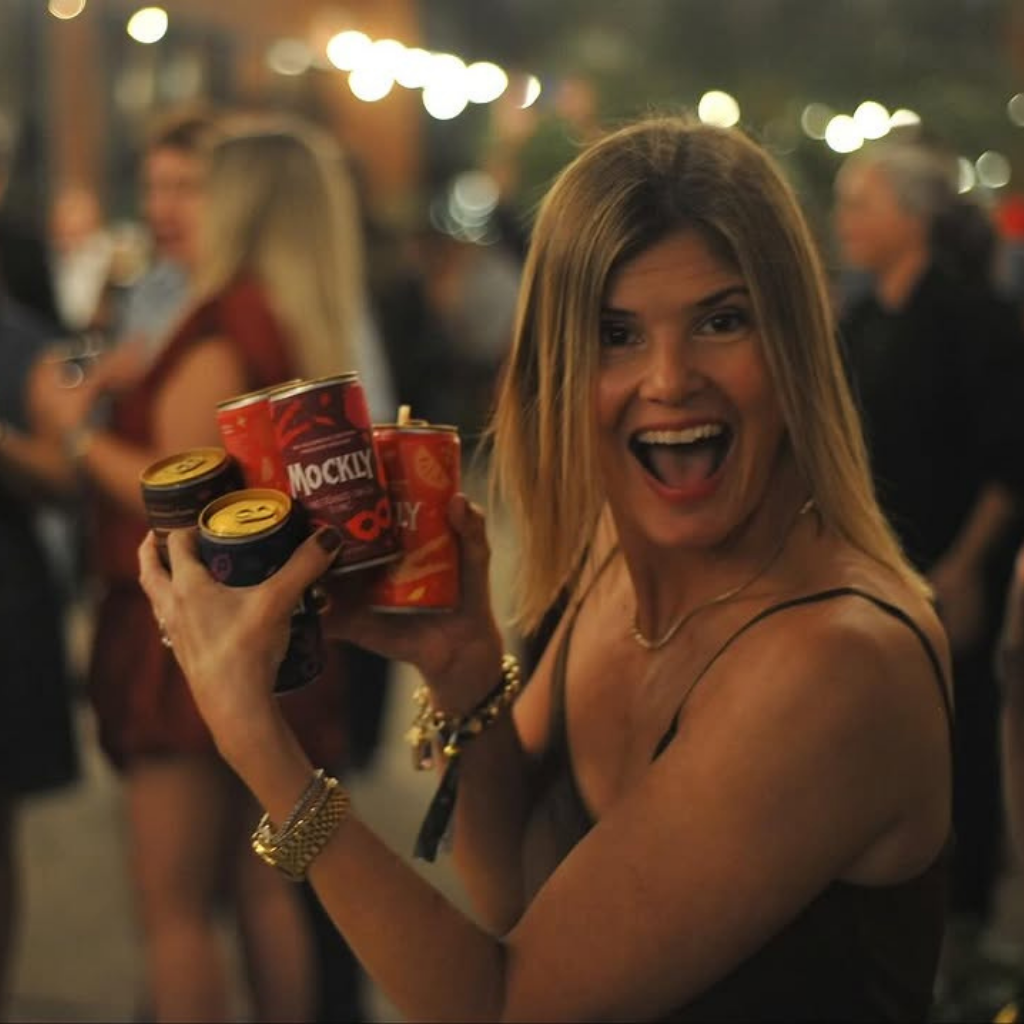
When Aimée Sedky, Co-Founder of Mockly, first considered a rebrand, she did what any rigorous founder would do: she ran focus groups. She put the existing can in front of people alongside new concepts. The original can won.
So she shelved the idea.
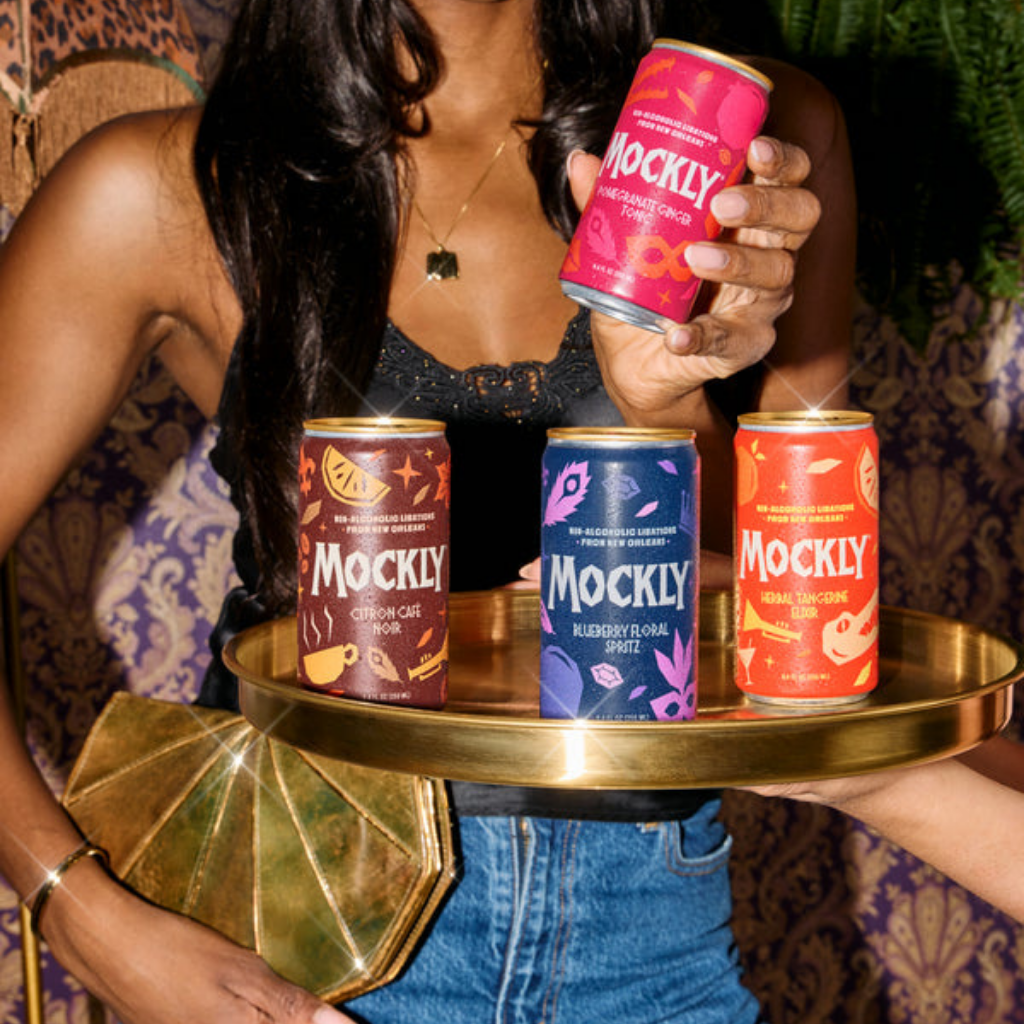
A couple of years later, she went back to the drawing board — and this time, she went all the way. New name conventions on the flavors. New packaging. Custom fonts. A full creative partnership with Los Angeles-based design studio Day Job. The result was a brand identity so different from what Mockly had been that Whole Foods gave it prime shelf placement and BevNet awarded Mockly’s newest flavor, Citron Café Noir, best RTD in the ANA space for 2025.
What changed? Not the product. Not the distributor relationships. Not the core consumer. What changed was the clarity of who Mockly actually is — and the willingness to anchor that identity to something specific enough to do real work in the market.
When the Original Can Wins the Focus Group, That Doesn't Mean It's Right
The early rebrand conversation at Mockly was a familiar one for founders. You’re growing, you’re hearing things from the market, you wonder if the packaging is keeping up with the product. Aimée and her co-founder Tarik brought in outside perspectives. The feedback pointed back at what they already had.
“People liked that the most,” she told me during our conversation. “So we’re like, okay, maybe it’s not the time to do it.”
What shifted wasn’t a single data point — it was an accumulation of signals. Aimée watched Poppi’s rebrand cut through the better-for-you soda category. A mentor at Molson Coors put it plainly: if you got it right the first time, you’re too late. And at retail, a different problem was becoming harder to ignore.
The ANA shelf was filling up with direct cocktail replacements — ginless gin and tonics, tequila-less palomas, one-for-one substitutes positioned explicitly against their alcoholic counterparts. Mockly wasn’t that. It never was. The brand offered something more independent — flavor-forward ANA libations built around the kind of indulgent, full-flavor experience that New Orleans itself is known for. But with the word “mocktail” in the branding and a design language that leaned heavily on flavor cues, Mockly was getting lost in the comparison.
“We thought that could be confusing for the consumer,” Aimée said. “They’d have a harder time placing what Mockly was.”
The New Orleans Identity Wasn't a Design Decision — It Was a Positioning Decision
The insight that drove the rebrand came from something Mockly had been hearing for years at trade shows and in the field: people loved New Orleans. Not just as a backdrop — as a reason to trust the product.
“Let’s face it,” Aimée said. “New Orleans is one of the flavor capitals of the world. It’s rich with flavor, rich with texture — and at the same time, it’s just not too fancy.”
When a brand claims that identity authentically — when the founders are from there, when the mixologist is local, when the brand is actually headquartered there — it communicates something to a buyer before a single word about the product has been read. It says: rich, indulgent, celebratory, and not trying to be precious about it.
That duality — sophisticated but approachable, indulgent but not intimidating — was exactly the positioning gap Mockly needed to occupy on the ANA shelf. And it was already true. The brand just needed to make it visible.
Day Job, the LA-based creative studio Mockly partnered with, understood it immediately. They came back with lines like “barely functional” — a nod to New Orleans’ cheerfully chaotic energy, the potholes, the fallen street signs, the city that operates on its own terms. The custom fonts they developed carried a voodoo-inflected edge. The can design balanced flavor clarity with genuine personality. “They were speaking our language,” Aimée told me. “That’s what we wanted to refine.”
The Shelf Problem Solved Itself When the Identity Got Specific
One of the quieter insights from Mockly’s rebrand story is how specific identity solves the shelf problem without having to fight for it directly. When the packaging was flavor-forward and generic, Mockly sat next to the alcohol-free spritz and the alcohol-free X, Y, Z, and the consumer had to work to understand the difference. When the packaging became unmistakably New Orleans — when the city’s name appeared prominently on the front of the can — the differentiation happened passively.
New Orleans on the label is a category of one. No other ANA brand owns it. And the ANA category, which is still earning its shelf space at retail, benefits enormously when its brands develop identities that stand on their own rather than relying on comparison to alcoholic counterparts. The less a buyer has to explain to a consumer what something isn’t, the faster the category grows.
A Product That Belongs in Bars — On Both Sides of the Menu
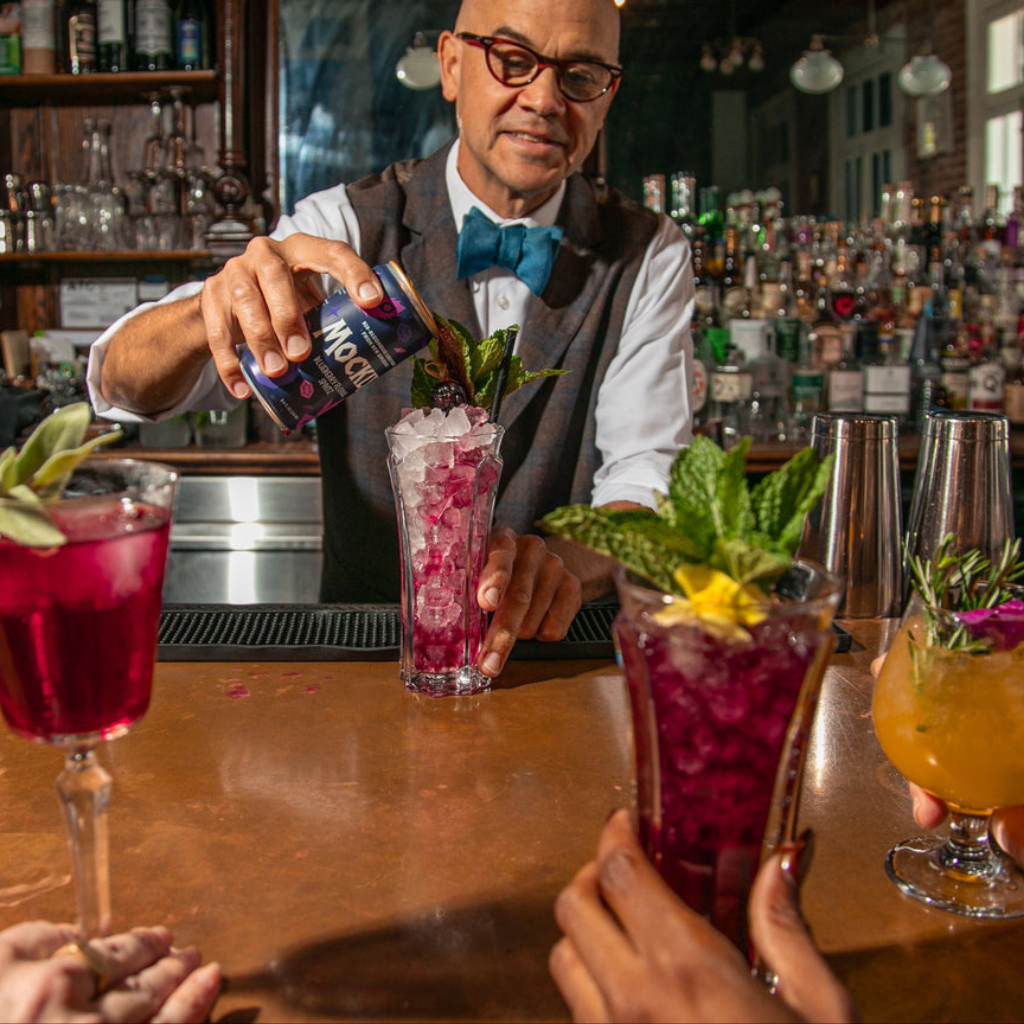
What makes Mockly’s story particularly compelling for the ANA category is what happened on-premise after the brand found its footing. Today, roughly 60% of Mockly’s business comes from hotels, bars, restaurants, and venues — including James Beard Award-winning establishments in New Orleans.
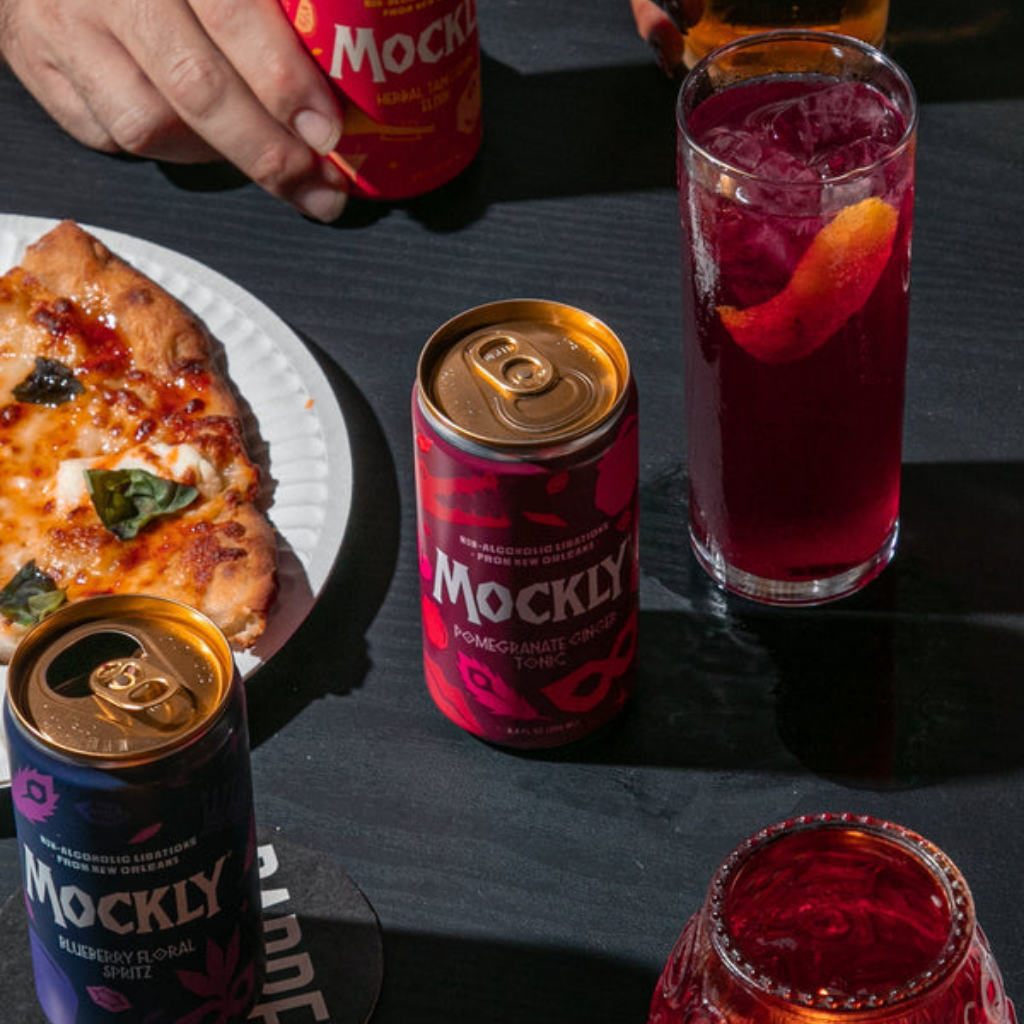
That number reflects a product architecture that was built from the start to earn a place in fully alcoholic environments. Mockly’s four SKUs — Blueberry Floral Spritz, Pomegranate Ginger Tonic, Herbal Tangerine Elixir, and Citron Café Noir — work as standalone ANA drinks and pair well with alcohol. Because they’re not positioned as substitutes for specific spirits, a bar can sell a $6 can as an ANA option and then build a $12 signature cocktail using the same product on a premium menu.
“It doesn’t require any bartender training,” Aimée explained. “It’s a consistent pour every time.”
That simplicity is significant. On-premise operators have historically been cautious about the ANA category — the complexity of menu integration, the training required, the question of whether ANA products actually belong behind a bar built around alcohol. Mockly’s design sidesteps all of it. The brand identity says celebration; the product flexibility says yes to every table.
What's Next for Mockly — and What It Means for the Category
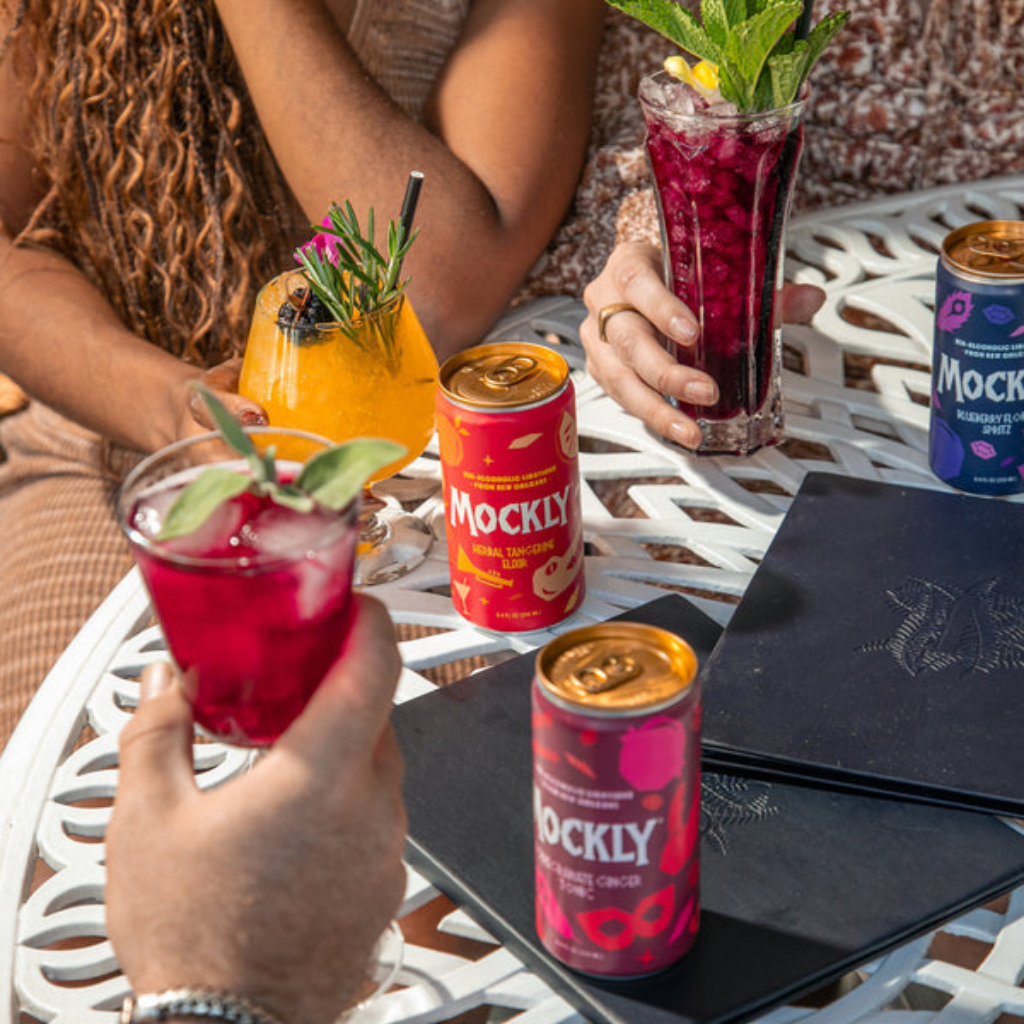
The rebrand has unlocked momentum that Aimée describes straightforwardly: “Now we’re just off to the races.” Whole Foods embraced the new look with enthusiasm. BevNet, which she jokes couldn’t be gotten for attention before, gave Mockly 4.5 stars and named Citron Café Noir the best ANA RTD of 2025. Trombone Shorty — Troy Andrews, one of New Orleans’ most recognized cultural figures — joined the brand as a partner and investor, deepening the authenticity of the New Orleans identity in a way that can’t be manufactured.
The distribution footprint is expanding beyond Louisiana into Mississippi and growing in markets like DC, Massachusetts, and Georgia.
What Mockly’s story demonstrates for the ANA category is something worth paying attention to: place-based identity, when it’s genuine, does category-building work that functional benefit claims can’t. It gives buyers a reason to care, gives consumers a context for the product, and gives brands a foundation that’s genuinely hard to replicate. As the ANA shelf matures and the competition for attention increases, that kind of specificity is going to matter more — not less.
“We’ll celebrate anything without judgment,” Aimée told me. “That’s the energy we’re channeling.”
In a category still working to establish itself as a serious part of adult drinking culture, that energy might be exactly what it needs.

Marcos Salazar
Marcos Salazar is the CEO of the Adult Non-Alcoholic Beverage Association. Connect with him on LinkedIn.
The ANA Insider
News, Insights, Events, & Jobs for the Adult Non-Alcoholic Beverages Industry
Join our community of over 10,000 industry professionals receiving the exclusive newsletter from the Adult Non-Alcoholic Association (ANBA).
Each newsletter delivers:
- Insights data in the ANA beverage landscape
- A round up the most important news and headlines
- Breaking news from ANBA members and new product launches
- Business webinars, industry events, and jobs at leading ANA companies